

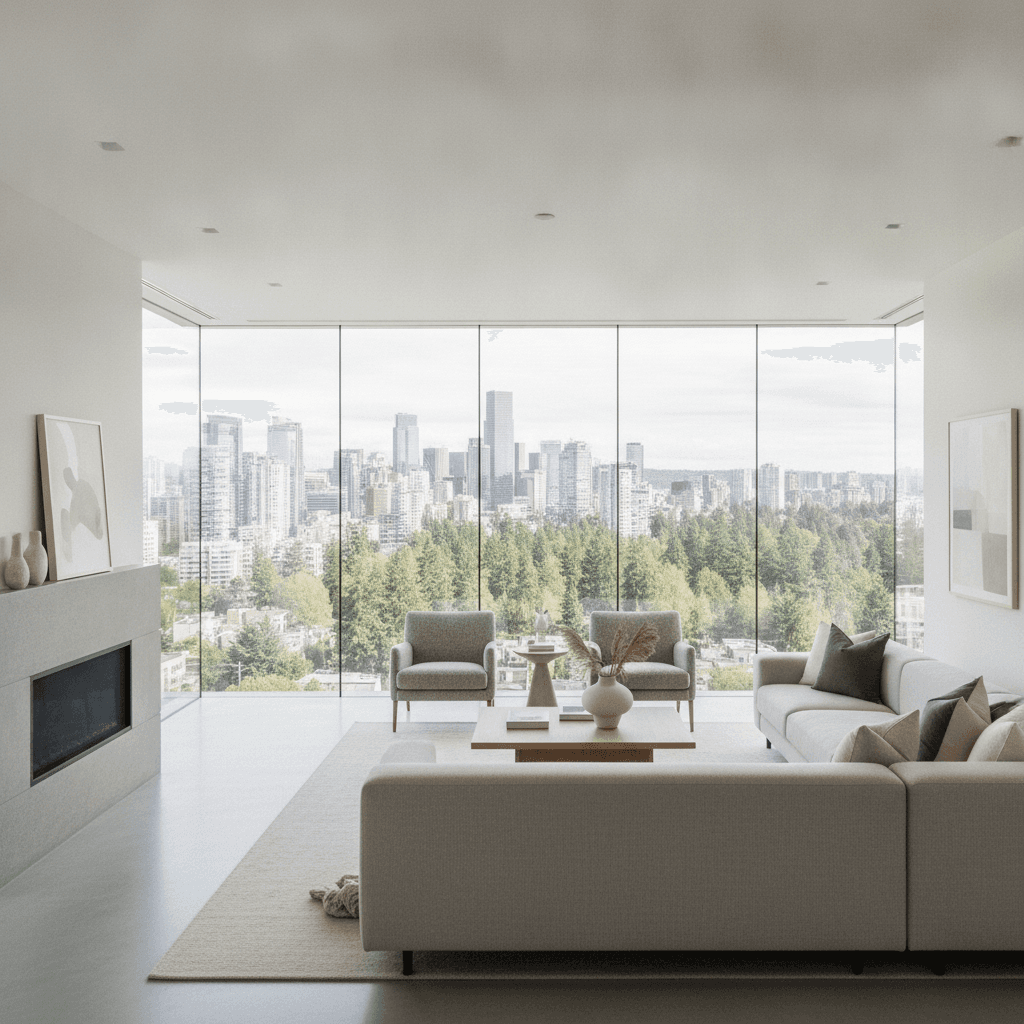
Last updated: October 2026
Key takeaway:Real estate photography in Vancouver combines accurate listing photos with optional video, floorplans, vertical clips, and drone coverage to present a property clearly online. The right mix depends on the home, its location, the intended buyer, and the questions buyers need answered before booking a showing.
By Silver Valley Studios Inc. • Refreshed for the next publication cycle
Vancouver buyers commonly encounter a property on a phone before they ever visit it. The first gallery image, the order of the rooms, the way windows and views are represented, and the availability of a useful floorplan all influence whether a listing earns further attention.
Professional real estate photography is therefore more than taking attractive pictures. It is a coordinated way to show a home’s condition, scale, layout, light, setting, and lifestyle without making the viewer work unnecessarily. Silver Valley Studios Inc. produces real estate photos, cinematic video tours, 2D floorplans, vertical social videos, and drone coverage from Maple Ridge, BC, for listings and brands across the region.
What Vancouver listing media should accomplish
A strong media package should help a buyer answer four practical questions quickly: What does the home look like, how do the rooms connect, will the layout work, and what is the surrounding context? Photos, video, floorplans, and aerial media each answer a different part of that decision.
- Photos show finish, condition, light, views, and detail.
- Video demonstrates movement through the home and communicates atmosphere.
- Floorplans make room relationships, dimensions, and furniture planning easier to understand.
- Drone media adds context for lots, access, views, orientation, and nearby features where those details matter.
The goal is not to include every possible format on every listing. It is to select the assets that make the property easiest to understand, then deliver them in forms suitable for MLS, a website, and social channels.
What is real estate photography?
Real estate photography is the professional capture and editing of images that represent a property for sale or lease. A complete real estate media plan may also include real estate videography, floorplans, vertical clips, aerial stills, and drone video, but still photography remains the foundation of most listing campaigns.
Good listing photography shows a room honestly while making its strongest features easy to notice. That means controlling mixed light, keeping vertical lines straight, choosing useful viewpoints, reducing visual distractions, and sequencing the gallery so the viewer can follow the home logically.
HDR photography uses multiple exposures to manage the difference between bright windows and darker interiors. Used carefully, it can preserve window views while retaining detail in cabinets, floors, walls, and furnishings. The finished image should still look natural rather than excessively bright or heavily processed.
Photography also needs to respect scale. Extremely wide lenses or aggressive perspective correction can make rooms appear larger than they are and may create distrust when buyers visit. A professional approach balances an inviting composition with an accurate representation of the space.
Why Vancouver listings need a coordinated media plan
Vancouver-area properties vary significantly in form and setting. A downtown condo, a North Shore view home, a Surrey new build, and a Maple Ridge acreage do not need the same gallery or the same supporting media. A useful plan starts with the property rather than a fixed package.
Condos often require careful window management, clean architectural lines, and selective coverage of amenities. The listing may need to establish the view, the building entrance, the lobby, parking, storage, and shared spaces without allowing those secondary images to overwhelm the home itself.
Townhomes benefit from clear sequencing because several floors can otherwise feel disconnected. A gallery should help a viewer understand the relationship between entry, living areas, bedrooms, stairs, patios, parking, and storage. A floorplan can be especially valuable when the home has a narrow footprint or multiple similar bedrooms.
Detached homes and larger properties may need more exterior coverage, backyard context, and a stronger sense of movement between indoor and outdoor spaces. Drone photography can be useful when lot orientation, driveway access, privacy, views, trails, water, or surrounding land are important to the decision.
For a broader explanation of still-image planning, the real estate photography guide provides a useful starting point. The central principle is simple: every asset should answer a buyer question or support the listing’s positioning.
How professional real estate media production works
A reliable production process connects preparation, capture, editing, and delivery. Confirming the property’s priorities before the appointment helps the photographer allocate time to the rooms and features most likely to influence the listing decision.
1. Define the listing story
Start with the intended audience and the property’s strongest differentiators. These may include natural light, a renovated kitchen, a flexible floorplan, outdoor space, a view, heritage details, amenities, or proximity to a setting that matters to the buyer. The brief should also identify whether the priority is a polished photo gallery, a video-first launch, social content, or a balanced package.
Share access details before shoot day. Condo and townhome appointments may involve elevator reservations, parking instructions, building contacts, amenity windows, and restrictions on common-area filming. Early coordination protects the schedule and reduces avoidable interruptions.
2. Prepare the property
Preparation has a direct effect on every image and video frame. Remove unnecessary items from counters, tables, floors, and open shelving. Hide cords, bins, remotes, pet supplies, and personal documents. Replace burned-out bulbs and keep fixture colour temperatures consistent where possible.
Clean windows and mirrors, polish reflective surfaces, straighten furniture, and make beds carefully. Outside, sweep entries, tidy patios, hide hoses and bins, and present landscaping at its best. The photographer can make technical improvements, but preparation determines what the camera has to work with.
3. Capture stills, motion, and layout
Interiors are generally captured while rooms are clean and ready, with a sequence that moves from the exterior and entry through the main living areas, kitchen, bedrooms, bathrooms, storage, and outdoor spaces. The exact order can change according to the property’s architecture and light.
HDR brackets help manage difficult contrast, while a tripod supports consistent framing. Video capture requires a separate approach: controlled camera movement, purposeful transitions, and enough time in each room for the viewer to understand the space. Floorplans require careful measurement and clear labelling so the final document is useful rather than decorative.

4. Edit for accuracy and consistency
Post-production should preserve believable colour, correct distracting lens effects, straighten architectural lines, and balance interior and exterior brightness. Retouching should remove temporary distractions where appropriate without changing the property’s material condition or creating a misleading impression.
Video editing should have a clear beginning, middle, and end. A short hero cut can introduce the home and its strongest transitions, while separate vertical exports can focus on individual features. The real estate videography guide explains how pacing and format can change according to the intended platform.
5. Deliver files for their actual destinations
One export rarely works equally well everywhere. Agents may need listing-ready stills, larger website files, landscape video for a property page, portrait video for social feeds, and a PDF floorplan. Naming and organizing the files clearly makes it easier to publish the campaign without confusing versions.
Before delivery, confirm which assets are included, whether drone coverage was completed, which formats are supplied, and whether any building or weather limitation affected the appointment. Clear delivery reduces last-minute questions when the listing is ready to go live.
Which real estate media should a Vancouver listing use?
The best package depends on the property rather than a universal checklist. The comparison below shows the main job of each format and the situations in which it is most useful.
| Media | Primary purpose | Useful when | Planning note |
|---|---|---|---|
| HDR photos | Show finish, light, condition, and detail | Every listing | Curate the gallery so similar views do not create repetition |
| Video tour | Show movement, room connections, and lifestyle | Homes with strong flow, premium positioning, or distinctive transitions | Keep the main edit purposeful and easy to follow |
| Vertical video | Highlight features in portrait format | Reels, TikTok, and social discovery | Keep important details away from interface overlays |
| 2D floorplan | Explain layout, relationships, and dimensions | Multi-level homes, compact layouts, and comparison shopping | Use clear labels and readable scale information |
| Drone photo or video | Show lot, access, orientation, views, and surroundings | Acreage, corner lots, view properties, and notable settings | Plan around weather, airspace, and the property’s actual story |
HDR photos: the essential foundation
Still images remain the most important part of a listing gallery because they allow buyers to inspect rooms at their own pace. Prioritize the spaces that establish the home’s identity: the exterior, entry, main living area, kitchen, primary bedroom, bathrooms, outdoor areas, and any feature that distinguishes the property.
A large image count is not automatically a better gallery. Repeated angles can make a home feel smaller or less interesting. For a typical detached home, a selective set of roughly 25 to 35 images may provide a useful planning reference, but the final count should follow the size, layout, and features of the property.
Real estate videography: show the flow
Video is particularly useful when the relationship between spaces is part of the home’s appeal. A steady transition from kitchen to dining area, living room to patio, or entry to an upper floor can communicate something that individual stills cannot.
A hero edit under 90 seconds is often easier to use in social promotion, while a longer website version may be appropriate when the property warrants more explanation. Video should not simply repeat every photo. Its value comes from movement, rhythm, atmosphere, and a coherent route through the property.
Vertical clips: isolate memorable features
Portrait video works well for a kitchen detail, storage solution, bathroom, garden, view, or amenity. Each clip should have one clear subject and enough screen time for the viewer to understand it. Separate exports make it easier to adapt the content to different platforms without cropping important details.
Vertical content should support the listing rather than replace the full gallery. A short clip may earn attention, but buyers still need accurate photos and layout information to evaluate the property seriously.
2D floorplans: reduce layout uncertainty
A floorplan gives buyers a different kind of information from a photograph. It helps them understand circulation, room relationships, stairs, entrances, and approximate furniture possibilities. This is useful for families comparing homes, remote buyers deciding whether to travel, and anyone assessing a compact or unusual layout.
Use readable labels and dimensions where available, and make the document easy to download or share. A floorplan should clarify the home without implying that it replaces an official measurement, survey, or inspection.
Drone coverage: add context, not decoration
Aerial coverage is most useful when the surrounding setting affects the purchase decision. It can show a long driveway, a corner position, a large parcel, a view corridor, outdoor privacy, or a relationship to trails, water, and nearby open space.
Drone is less essential for every urban condo or interior-focused listing. In those cases, the budget and production time may be better directed toward interiors, amenities, a floorplan, or a concise video tour. A qualified provider should also confirm operational requirements and any relevant restrictions before flight.

How to prepare a Vancouver property for photography
Preparation is most effective when it is specific and scheduled. Sellers should not wait until the photographer arrives to begin moving items because rushed decisions can leave rooms unfinished and reduce the time available for creative coverage.
Interior checklist
- Clear kitchen and bathroom counters except for a few intentional styling elements.
- Remove personal photographs, paperwork, magnets, medications, and small loose items.
- Hide cords, remotes, wastebaskets, pet supplies, and cleaning products.
- Make beds, arrange cushions, straighten curtains, and align dining chairs.
- Replace failed bulbs and keep the colour of visible fixtures as consistent as possible.
- Clean windows, mirrors, stainless steel, glass, floors, and reflective surfaces.
Exterior checklist
- Sweep the entry, paths, balcony, deck, and patio.
- Move bins, hoses, tools, toys, and unnecessary vehicles out of the strongest views.
- Tidy lawns, garden beds, planters, and outdoor furniture.
- Confirm that gates, garages, sheds, and exterior features can be accessed safely.
Timing and access
Natural light changes throughout the day, and Vancouver-area weather can shift quickly. Discuss which rooms receive the best light and whether the shoot needs a flexible exterior or drone window. North-facing rooms may benefit from a brighter part of the day, while harsh direct light can require more careful timing in south-facing spaces.
Condo and strata properties require additional planning. Confirm elevator access, parking, building entry, amenity availability, and any notice requirements before the appointment. If the listing includes a balcony, shared roof deck, gym, lounge, or courtyard, verify whether those areas can be filmed and when they are available.
Planning files for MLS, websites, and social media
Media should be captured with its eventual use in mind. The main gallery needs a strong opening image and a sensible order. A property website can support larger stills and a more detailed video. Social platforms may require portrait crops, short clips, captions, and safe margins around interface controls.
Keep the gallery sequence intuitive: exterior or arrival, entry, main living spaces, kitchen and dining, primary suite, bathrooms, secondary rooms, storage, and outdoor areas. Adjust the order when the architecture demands a different route, but avoid making viewers jump randomly between levels or disconnected spaces.
For agents who need a coordinated package, the real estate photography services page outlines how photos, floorplans, video, vertical cuts, and drone can be planned together. The benefit of a unified brief is visual consistency: similar colour, pacing, file organization, and treatment across the campaign.
Compliance and local considerations
Photography and video inside a home still require respect for privacy, access, and building rules. Confirm the seller’s instructions, remove personal information from visible surfaces, and clarify which rooms or possessions should not be recorded.
Aerial work requires additional planning. The operator should determine whether the aircraft and operation meet applicable Canadian requirements, whether the location presents an airspace issue, and whether the property or building manager needs advance notice. Weather, visibility, nearby structures, and people on the ground can all affect whether an aerial sequence is appropriate on a particular day.
Maple Ridge and nearby Fraser Valley communities can present changing weather and larger properties that benefit from flexible exterior timing. For a condo in Burnaby, Richmond, or Vancouver, building access and amenity coordination may be more important than a long exterior window. In Surrey, Coquitlam, Langley, and Abbotsford, the most useful mix may depend on whether the listing is a compact townhome, a new build, or a property where the lot and neighbourhood context are central.
For video-led campaigns, the realtor videographer guide can help agents think through pacing, property type, and deliverable choices before booking.
How to choose a real estate media provider
When comparing providers, look beyond a portfolio’s most dramatic images. Ask how the provider handles mixed lighting, vertical lines, windows, floorplans, video movement, file delivery, weather, strata access, and revisions. The goal is a repeatable process that protects accuracy as well as appearance.
- Does the portfolio include properties similar to yours?
- Are stills, video, floorplans, vertical exports, and drone available when needed?
- How are files organized for MLS, websites, and social use?
- What preparation and access information is required before the appointment?
- How are weather changes and restricted building access handled?
- Are aerial operations planned with the relevant safety and airspace considerations?
Ask for a clear description of deliverables rather than assuming that every package includes every format. If you need both real estate photography and real estate videography, one coordinated provider may simplify the brief, schedule, visual style, and delivery process.
Working with Silver Valley Studios Inc.
Silver Valley Studios Inc. is a British Columbia-based photography and videography company specializing in real estate media and brand content creation. Based in Maple Ridge, the studio works with realtors, developers, restaurants, and small businesses to produce professional photos, cinematic video tours, 2D floorplans, vertical videos, and drone coverage.
The service area includes Abbotsford, Mission, Chilliwack, Langley, Maple Ridge, Surrey, Coquitlam, Burnaby, Richmond, Greater Vancouver, and Vancouver Island. Each property receives a media recommendation based on its form, features, access, intended audience, and launch requirements rather than an automatic list of formats.
Agents planning a listing can also review the listing photos guide for gallery sequencing and image-planning considerations. If a campaign needs a broader moving-image package, the videography services overview describes the role of video in property marketing.
Frequently asked questions
What is included in real estate photography in Vancouver?
At minimum, real estate photography usually means professionally captured and edited listing stills. Depending on the property and campaign, the package may also include video tours, vertical social clips, 2D floorplans, drone photography, or drone video. Confirm the exact deliverables, file formats, and intended uses before booking.
How many photos should a Vancouver listing have?
There is no universal number because a studio condo and a large detached home need different coverage. A typical detached-home gallery may use roughly 25 to 35 carefully selected images as a planning reference, while the final count should reflect the property’s size, layout, features, and listing strategy. More images are not automatically better if they repeat the same viewpoint.
Do I need real estate videography for every listing?
No. Video is most useful when movement, room flow, lifestyle, views, or a distinctive feature helps explain the property. For some compact listings, a strong still gallery and floorplan may answer buyer questions more efficiently; for premium homes, complex layouts, and social-led campaigns, a video tour can add useful context.
When is drone photography worth adding?
Drone coverage is worth considering when the lot, approach, views, orientation, privacy, or relationship to nearby trails or water influences the buyer’s decision. It is often less important for an interior-focused urban condo. The provider should confirm weather, safety, airspace, and property or strata requirements before scheduling aerial work.
What should sellers do before the photographer arrives?
Declutter surfaces, hide personal items and cords, clean windows and reflective surfaces, replace failed bulbs, make beds, and tidy outdoor areas. Sellers should also secure pets and confirm that every room intended for coverage is accessible. Completing these tasks before the appointment leaves more time for careful capture and reduces rushed styling.
Plan your Vancouver listing media
A successful listing package gives buyers enough information to decide whether the property deserves a showing. Use accurate HDR photos as the foundation, add video when flow and lifestyle matter, include a floorplan when layout may create questions, and use drone when the surrounding context is genuinely part of the property’s value.
Silver Valley Studios Inc. can help plan a cohesive combination of photos, real estate videography, floorplans, vertical clips, and aerial coverage for listings across Greater Vancouver, the Fraser Valley, and Vancouver Island. Contact Silver Valley Studios Inc. to discuss your upcoming property media plan.