


Running a drone photography business is the professional delivery of aerial photos and video to clients across real estate, construction, and commercial sectors. It blends flight operations, visual storytelling, and compliance into a repeatable service. From our Maple Ridge, BC base at 13260 236 St, Silver Valley Studios Inc. uses drones to help listings win attention and brands stand out.
By Sumeet S. — Founder & CEO, Silver Valley Studios Inc. • Last updated: 2026-06-02
At a Glance
This guide shows how a modern drone photography business attracts clients, operates legally, and delivers consistent results. You’ll learn what it is, why it matters for real estate and brands, how to run shoots, and how Silver Valley Studios Inc. turns aerials into measurable marketing outcomes.
Use this quick overview to jump to what you need now.
- What a drone media service actually delivers to clients
- Why aerial visuals drive listing and brand performance
- Exact workflow: preflight, capture, and delivery
- Approaches for real estate, construction, hospitality, and SMBs
- Best practices, safety, and compliance basics
- Tools and templates you can use immediately
- Mini case studies from Greater Vancouver engagements
What Is a Drone Photography Business?
A drone photography business provides on-demand aerial photos and video as a professional service. It combines licensed flight operations, visual planning, and post-production to deliver polished media packages for real estate listings, developers, hospitality, and local brands.
In our work at Silver Valley Studios Inc., drone deliverables are never “just a few sky shots.” We design each flight to answer a marketing goal—prove a view corridor, showcase acreage, reveal access, or build brand emotion. That’s what clients actually buy: business outcomes, not altitude.
Core deliverables you can count on
- Aerial stills: 10–25 photo set covering hero exteriors, property lines (when applicable), and neighborhood context.
- Aerial video clips: 4K footage at 24/30/60 fps for cinematic tours and social reels.
- Motion patterns: Reveal, orbit, crane, and tracking passes that cut together smoothly.
- Vertical formats: 9:16 clips optimized for Instagram Reels and TikTok, plus 1:1 crops for feeds.
- Integrated packages: Drone paired with interior HDR sets, floorplans, and ground video for a complete story.
For realtors in competitive markets, this often sits inside a broader media day—HDR photos of interiors, a property video tour, a 2D floorplan, and targeted drone passes. That integrated bundle is what helps listings trend on social, earn more saves, and drive private showings.
Why Drone Media Matters for Real Estate and Brands
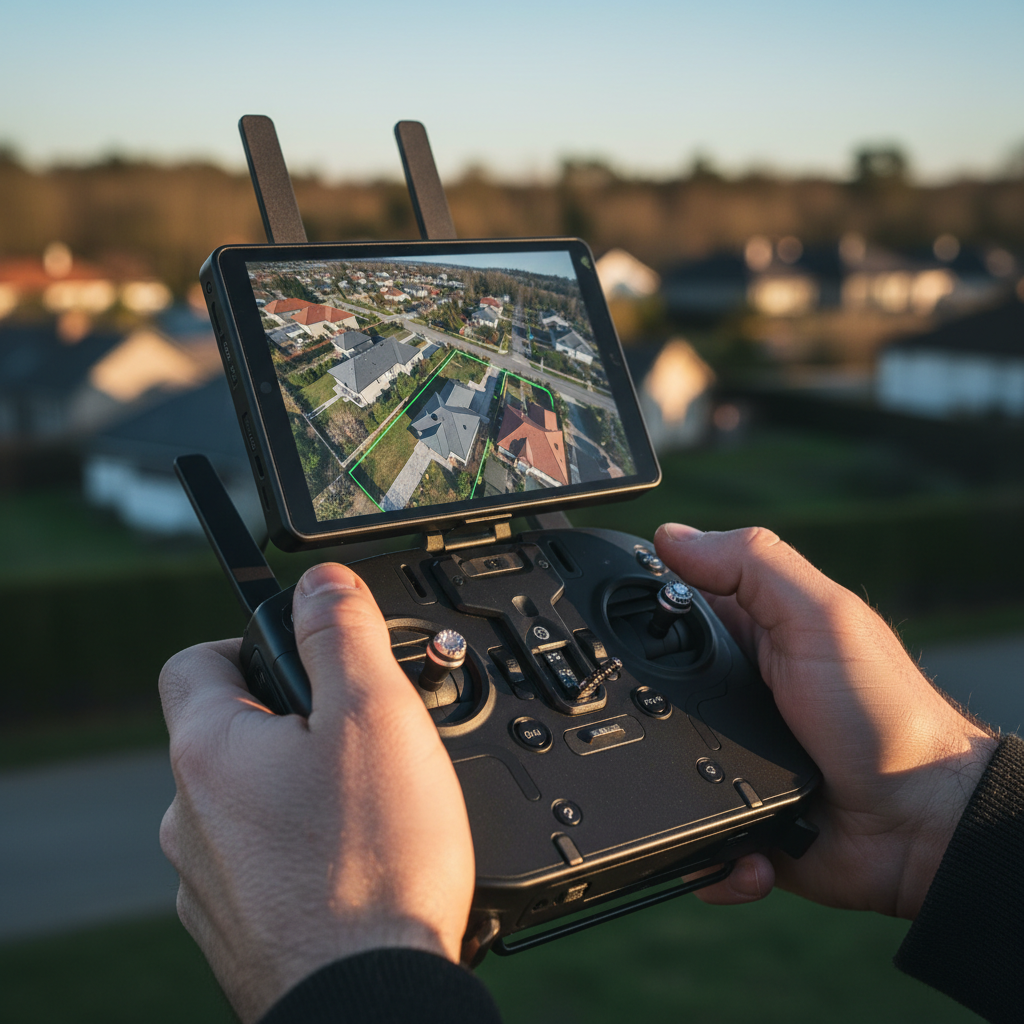
Aerial storytelling elevates perception, clarifies context, and increases engagement. For listings, it shows scale, views, and proximity in seconds. For brands, it adds motion and perspective that stop thumbs and lift recall across social feeds.
Here’s the thing: buyers and diners make decisions quickly. Fast context wins. A single 5–8 second drone clip can convey neighborhood appeal, parking access, and outdoor amenities more clearly than a paragraph of text. We see stronger watch-through rates on reels that open with a decisive aerial reveal.
Business benefits you can measure
- Attention lift: Dynamic motion and altitude changes pull viewers into the story within 2–3 seconds.
- Spatial clarity: Acreage, corner lots, roof features, and amenities are obvious from above.
- Brand memorability: Establishing shots and orbits create a premium feel viewers remember.
- Content velocity: One flight yields multiple cuts—hero video, reels, teaser stories, and thumbnails.
- Cross-channel fit: 16:9 for MLS and YouTube; 9:16 and 1:1 for Instagram and TikTok.
In Greater Vancouver, waterfronts, mountain backdrops, and neighborhood greenery are assets. Drone media captures those in a way ground cameras can’t, reinforcing lifestyle value that drives inquiries.
How a Drone Shoot Works: Step-by-Step
Every successful flight follows a repeatable process: plan the story, check airspace and site constraints, run a gear and safety checklist, capture a precise shot list, and deliver polished edits with filenames, captions, and aspect ratios aligned to the client’s channels.
Our Maple Ridge team runs this playbook for real estate, hospitality, and small businesses across BC. The steps keep crews safe, shots efficient, and outcomes predictable.
1) Pre-production and story planning
- Goal mapping: Define the single job of the aerial—view, scale, access, or brand mood.
- Shot list: 8–12 moves max; list elevation, direction, and duration for each.
- Site notes: Trees, wires, reflective surfaces, nearby roads, and spectator areas.
- Deliverables: Specify 16:9 main cut, 9:16 reels, stills count, and thumbnail needs.
2) Airspace and permission checks
- Jurisdiction review: Confirm applicable rules for the operating location.
- Site permission: Written approval from the property owner or manager.
- Weather and NOTAMs: Wind limits, precipitation risk, and any advisories.
3) Gear prep and safety
- Batteries: 3–6 charged packs; plan 20–30 minutes usable flight time per pack.
- Sensors: 1/1.3″ to 4/3″ sensors for clean 4K; ND filters ready for 1/50–1/120 shutter.
- Redundancy: Spare props, SD cards, and a secondary aircraft when the site warrants.
- Briefing: Roles, hand signals, emergency procedures, and people-movement plan.
4) On-site capture
- Establishing passes: 2–3 reveals that quickly set context.
- Feature passes: Orbits and cranes focused on the property’s selling points.
- Continuity: Duplicate key moves at multiple focal lengths for flexible edits.
5) Post-production and delivery
- Color and HDR: Balanced, natural grades that match ground footage and interior HDR photos.
- Sound and pacing: Music-driven cuts at 1–2 beats per second for social; slower for MLS tours.
- File structure: Clearly named folders for 16:9, 9:16, stills, and source media.
- Handover: Delivery with usage notes and suggested captions or CTAs.
Want this process handled end-to-end? Explore our media services or connect with our videography team for an integrated shoot plan.
Types of Drone Services That Win Work
The most reliable niches pair aerial visuals with a clear buyer outcome: listings that need context, developments that need progress tracking, and local brands that need scroll-stopping angles. Packaging drone with photos, tours, and floorplans multiplies value.
Here are the approaches we see perform across BC and Vancouver Island, with examples from recent engagements.
Real estate listings (residential and luxury)
- Use cases: Establishing shots, view proof, acreage, waterfront, and neighborhood highlights.
- Pairings: Interior HDR photos, property video tours, and 2D floorplans.
- Example: A Maple Ridge home with mature trees—drone crane-up reveals sunlit yard before cutting to the living room walkthrough.
Developers and builders
- Use cases: Progress documentation, stakeholder updates, and marketing teasers before completion.
- Pairings: Timelapse ground shots and voiceover explainer edits.
- Example: Phased captures every 2–4 weeks showing framing, roofing, and site access improvements.
Hospitality and restaurants
- Use cases: Location reveal, patio ambiance, parking access, and neighborhood vibe.
- Pairings: Interior food and ambiance photography plus vertical reels.
- Example: Our gourmet bistro project used a 5-second opening aerial, then cut to steam, plating, and human moments at eye level.
Commercial spaces and offices
- Use cases: Showcase access, parking, signage visibility, and commuter routes.
- Pairings: Team portraits and workspace b-roll for recruiting and brand campaigns.
- Example: See our corporate office shoot for how aerials set the tone before interior walk-throughs.
Best Practices: Safety, Quality, and Client Experience
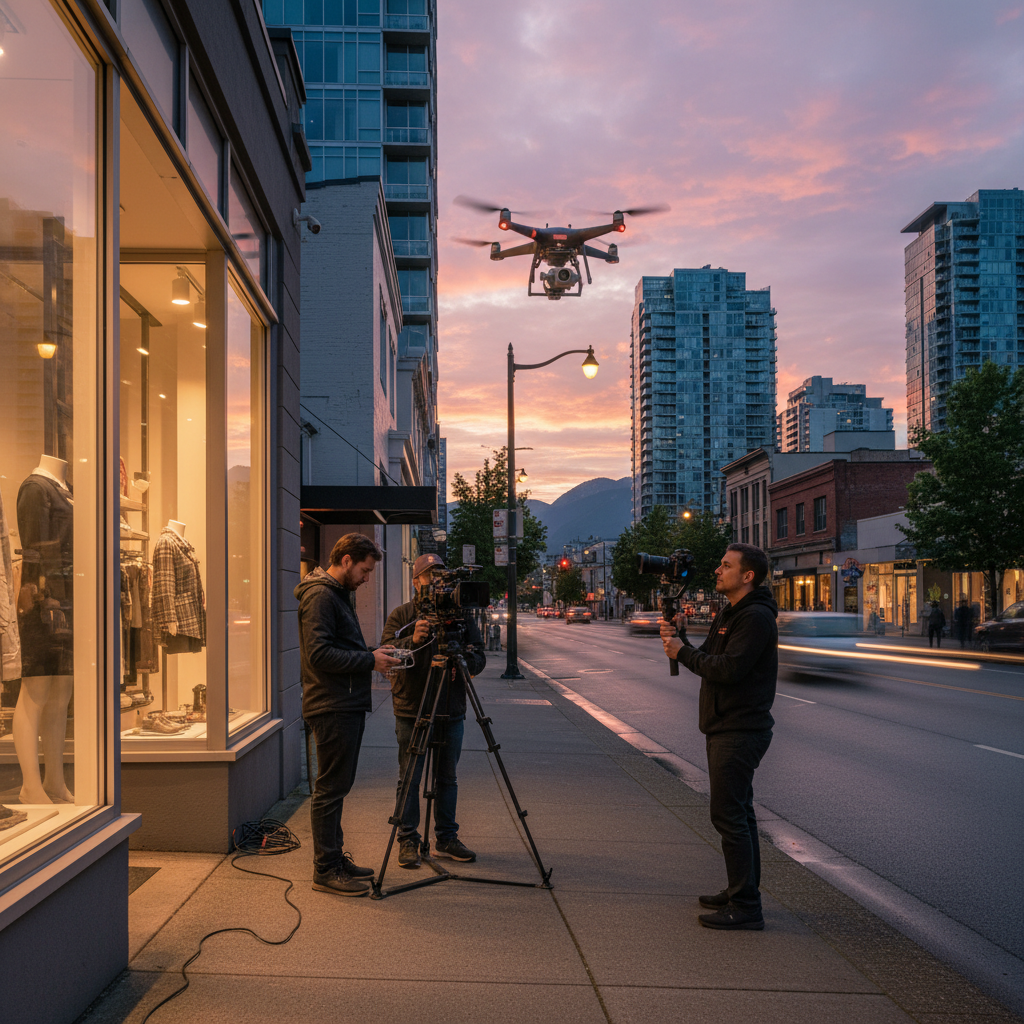
Great drone work feels effortless because the team did the hard work: precise planning, disciplined safety, consistent color, and clear client communication. Standardize checklists and treat every flight like a small production.
We obsess over the basics because they produce reliable results, even on windy or time-compressed days.
Flight and safety habits
- Site cones and buffer: Create a visible operations zone and spectator standoff distance.
- Wind discipline: Cap ground winds based on aircraft and gust factors; keep margin for return-to-home.
- Observer role: Dedicated Visual Observer improves situational awareness and crowd control.
Image consistency and polish
- Matching profiles: Shoot log/flat when available and apply a consistent LUT per camera family.
- Natural grade: Balanced highlights and shadow detail to match interior HDR sets.
- Sound design: Subtle whooshes and risers on social cuts increase perceived quality.
Client communication
- Shot list sign-off: Agree on 8–12 moves; lock timing, directions, and contingencies.
- Same-day previews: One or two frame grabs can accelerate approvals.
- Clear usage notes: State where vertical vs. landscape assets win and why.
Explore our portfolio to see how these habits translate into consistent results across real estate and commercial projects.
Tools, Gear, and Templates We Rely On
Use a compact, quiet aircraft with a large sensor, ND filters, and strong stabilization. Pair it with repeatable checklists, branded delivery folders, and a lightweight review workflow so clients approve edits quickly and with confidence.
We prefer dependable tools and simple systems that keep crews nimble and clients informed.
Capture kit essentials
- Aircraft: Mid-size drone with 1/1.3″–4/3″ sensor for clean 4K, strong wind handling, and precise positioning.
- Filtration: ND 8–64 to maintain cinematic shutter speeds in bright conditions.
- Power: 3–6 batteries, DC charging in-vehicle, and a watt-hour tally for the day.
- Ground support: Gimbal for interiors, tripod for timelapse, collapsible landing pad.
Workflow and templates
- Preflight checklist: Airspace notes, compass calibration, prop inspection, and battery cycle count.
- Shot list template: Move, direction, altitude, duration, and purpose fields for each pass.
- Delivery folders: 01_Stills, 02_Video_16x9, 03_Reels_9x16, 04_Source.
- Client review: One link for previews, timestamped comments, and a 1–2 round revision window.
Need a bundled approach for your next listing or brand shoot? Our services page outlines how we combine aerials with interior HDR, floorplans, and cinematic video.
Local Insights: Operating in Maple Ridge and Across BC
In Maple Ridge and across BC, successful drone work pairs weather-aware planning with respectful operations near neighborhoods and trails. Build extra time for wind shifts, keep a clean spectator buffer, and coordinate property access so takeoffs and landings feel seamless for clients.
Terrain and microclimates change quickly in the Lower Mainland. We plan windows with wind tolerances and backup angles so we still deliver when conditions move.
Local considerations for Maple Ridge
- Schedule flights when winds are calm and light is soft—mornings or golden hour often work best in Maple Ridge.
- Factor in seasonal rain and fast-moving cloud layers in BC; bring ND and polarizers to control glare after showers.
- Coordinate with property managers ahead of time; clear staging areas make takeoffs smoother and safer.
We also build routes that respect neighbors and pets. Quiet operations and clear signage reduce onlookers so we can focus on the plan.
Pricing Factors and Packaging Without the Guesswork
Package drone with photos, tours, and floorplans to maximize value. Scope depends on site complexity, deliverable count, travel, and review cycles. Clarifying goals, shot counts, and formats up front prevents scope creep and keeps timelines predictable.
While we don’t list numbers here, the inputs below help you shape the right package for your listing or brand shoot.
What typically affects scope
- Site complexity: Trees, wires, crowds, or tight staging areas add planning time.
- Deliverable volume: Still count, cut length, and vertical variants increase edit time.
- Travel and access: Ferries or special access windows require buffers in the schedule.
- Revision approach: Setting a 1–2 round window keeps approvals efficient.
Many realtors pair aerials with HDR interiors, a property video tour, and a floorplan so every asset tells the same story on MLS and social.
Mini Case Studies: How Aerials Change Outcomes
When aerial media aligns with the marketing goal, it changes outcomes: higher saves, more inquiries, and faster decisions. These short scenarios show how framing, timing, and pairing assets drive results for real clients in Greater Vancouver.
Each example reflects the way we scope, shoot, and deliver as a unified team.
Scenario 1: Family home with mature trees (Maple Ridge)
- Problem: Ground shots hid yard size and sunlight.
- Plan: 3 golden-hour crane-ups from yard corners, then interior HDR and a 9:16 reel.
- Outcome: Stronger watch-through on the reel and more showing requests within the first weekend.
Scenario 2: New build progress (Tri-Cities)
- Problem: Stakeholders struggled to visualize month-to-month progress.
- Plan: Repeatable aerials every 3 weeks from fixed bearings; side-by-side edits for updates.
- Outcome: Faster consensus on milestones and smoother coordination between trades.
Scenario 3: Bistro with patio seating (Greater Vancouver)
- Problem: Needed a location hook for social ads.
- Plan: 5-second opening aerial, then food, steam, and smiles; exported 16:9 and 9:16.
- Outcome: More saves and reservations from short-form ads that led with aerial mood.
Marketing Your Drone Photography Business
Package outcomes, not just flights. Lead with before/after stories, vertical-first edits, and clear use cases by niche. Maintain a lightweight portfolio and make booking effortless so clients can move from idea to shoot without friction.
Here’s how we recommend organizing your outreach and content if you’re building momentum this season.
Messaging and offers
- Outcome framing: “Prove the view,” “Show the acreage,” or “Fill seats on Thursdays.”
- Mini-bundles: Aerial + HDR interiors + 30–45s tour; or Aerial + 3 reels + 10 stills.
- Social snippets: 6–10 second hooks with a single motion and bold first frame.
Portfolio and proof
- One-page gallery: Keep your portfolio lean with 8–12 strongest projects.
- Before/after: Lead with a static frame vs. finished reel comparison.
- Short captions: State the goal, move count, and the win in one sentence each.
Distribution and follow-up
- Local prospecting: Realtors, builders, and hospitality managers within your service radius.
- Publishing rhythm: Two reels per week and one carousel with behind-the-scenes frames.
- Call to action: Link to contact with a simple “Plan your next listing’s aerials.”
For listing marketing structure ideas, see these real estate professional tips and this short note on designing realtor flyers to support your visuals.
Comparison: Where Drone Media Fits in Your Visual Mix
Drone media isn’t a replacement for interiors, floorplans, or ground tours—it’s the context layer. Use aerials to hook interest, then rely on interiors and plans to convert attention into action.
Use this quick table to map when each asset wins.
| Use Case | Drone Aerial | Interior HDR Photos | Property Video Tour | 2D Floorplan |
|---|---|---|---|---|
| Show scale/land | Best | Good | Good | Helpful |
| Prove a view | Best | Good | Good | N/A |
| Explain layout | Helpful | Good | Best | Best |
| Hook social viewers | Best | Helpful | Best | N/A |
| Verify access/parking | Best | Helpful | Good | N/A |
If you want a single team orchestrating all four, our services page breaks down how we bundle aerials, interiors, floorplans, and tours.
Frequently Asked Questions
These short answers clarify common questions about planning, deliverables, and collaboration. Each response is designed to help you make fast, confident decisions for your next listing or brand shoot.
How many drone photos and clips do I actually need?
For most listings, plan 10–20 stills plus 6–10 short motion passes. That’s enough variety for MLS, a 30–45 second main cut, and two or three vertical reels without diluting quality.
Do you also handle interiors, tours, and floorplans?
Yes. We pair aerials with interior HDR photos, property video tours, and 2D floorplans so the entire story feels cohesive. One team, one plan, matching color and pace.
How should I prepare the property for aerials?
Tidy yards, remove cars from the driveway if possible, and secure pets. We’ll stage a clear takeoff/landing area and walk the site to confirm the safest angles and moves.
How fast is typical turnaround?
Most aerial photo sets are ready within 24–48 hours. When bundled with interiors, a floorplan, and a property tour, delivery typically follows once all assets align for a cohesive release.
Conclusion and Next Steps
A drone photography business works when it’s outcome-led and systemized. Pair aerials with interior visuals, tours, and floorplans; run a tight safety and review process; and package deliverables by channel so clients see value immediately.
Here are final pointers and a light call to action if you want help.
Key Takeaways
- Lead with outcomes: view proof, scale, or brand mood tied to a goal.
- Use a repeatable workflow: plan, check, brief, capture, and deliver.
- Bundle assets: aerials plus interiors, tours, and 2D floorplans win more attention.
- Keep it easy to buy: simple offers, fast previews, and clear next steps.
Action steps
- List your top three listings or campaigns that would benefit from aerial context.
- Draft an 8–12 move shot list for each with a single-line goal per move.
- Decide your delivery mix: 16:9 main cut, 9:16 reels, and 10–20 stills.
- Book an integrated shoot with our Maple Ridge team.
Want extra marketing structure? Skim this quick note on flyers vs. brochures to pair print touchpoints with your aerial-first digital plan.