

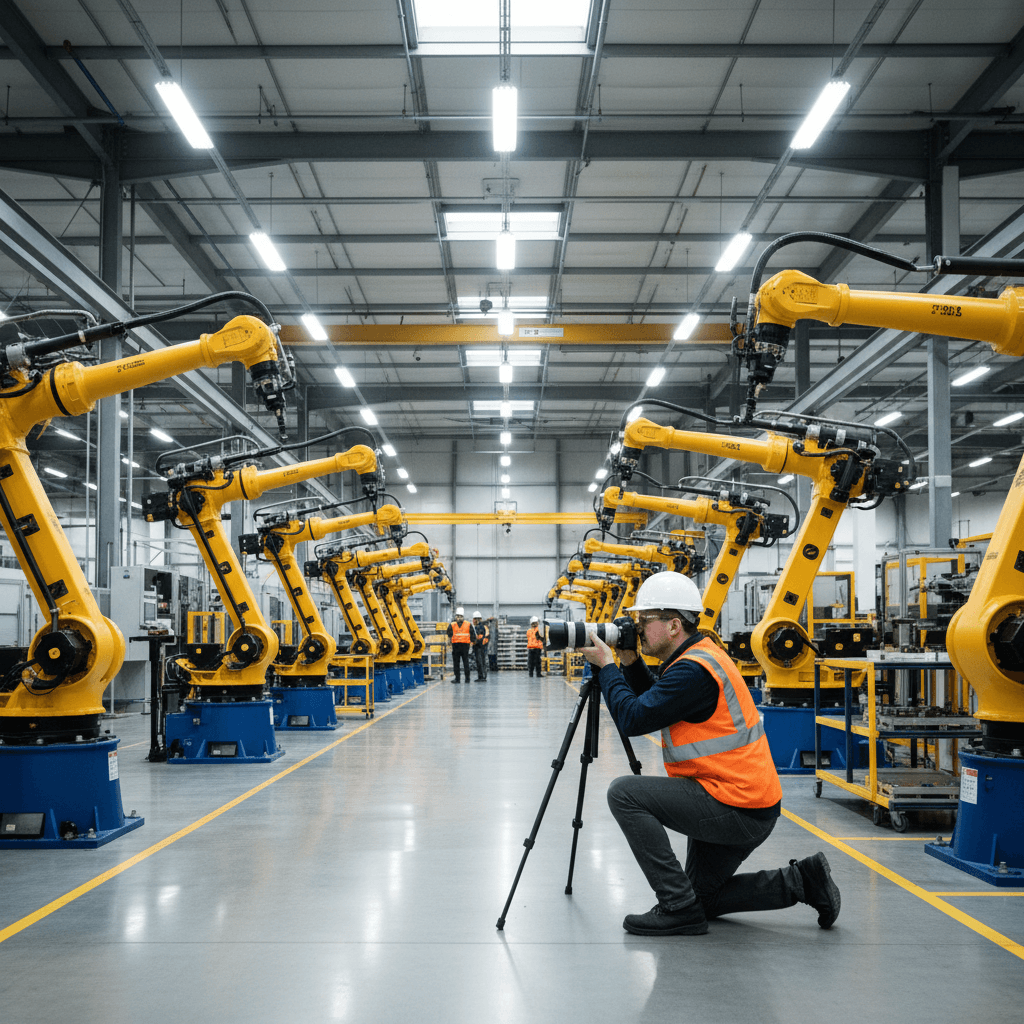
Industrial photography is the professional documentation of heavy industry—people, processes, and machinery—using specialized lighting, lenses, and safety-first workflows. It turns complex operations into clear visual stories that support marketing, training, and compliance. From our Maple Ridge base at 13260 236 St in BC, Silver Valley Studios Inc. covers Greater Vancouver facilities and sites.
By Sumeet S., Founder & CEO — Silver Valley Studios Inc.
Last updated: 2026-06-02
Quick Summary
Industrial photography captures manufacturing, energy, construction, and logistics operations with technical precision and strict safety. This complete guide explains definitions, benefits, workflows, types, tools, and five pro tips—built for Maple Ridge and BC operations—so your visuals work across marketing decks, training modules, audits, and investor updates.
- Clear definition of industrial photography and how it differs from real estate media
- Why authentic operations imagery boosts trust, recruiting, and sales enablement
- How shoots run on active sites without disrupting production or safety
- Five expert tips for sharper, safer shots that scale across channels
- Tools, drone considerations, and localized guidance for Maple Ridge and BC
For integrated photo, video, and aerials across commercial and industrial spaces, explore our core services overview to see how we package deliverables for teams.
What Is Industrial Photography?
Industrial photography is the specialized practice of documenting real production—machines, workflows, and teams—under live conditions. It prioritizes safety, accuracy, and clarity so images serve marketing, operations, recruiting, and documentation needs. The aim is truthful visuals that make complex processes understandable at a glance.
At Silver Valley Studios Inc., we extend our real estate and commercial storytelling into factories, utilities, logistics hubs, and construction. Residential listings emphasize space and lifestyle. Industrial assignments emphasize process, sequence, and scale. Both require narrative craft and clean lighting, but the constraints and goals differ on the floor.
| Aspect | Industrial Photography | Real Estate/Property |
|---|---|---|
| Primary Focus | People + process + machinery | Architecture + interiors + lifestyle |
| Environment | Active, noisy, variable light (LED/arc/ambient) | Controlled, staged, consistent light |
| Safety | PPE, escorts, permits, LOTO awareness | Trip hazards, occupancy, general caution |
| Deliverables | Marketing, training, documentation visuals | Listing photos, video tours, 2D floorplans |
Because our team already produces HDR photos, cinematic 4K video, and drone coverage for businesses, we can translate that clarity to complex facilities. See recent commercial spaces in our corporate office shoot breakdown and browse the broader portfolio for style continuity.
Why Industrial Photography Matters
Operations imagery builds trust fast. It reduces ambiguity for buyers, supports safety training, and strengthens employer branding. Clear photos and video shorten sales cycles, answer common RFQ questions, and help new hires grasp SOPs sooner—without extra meetings or site tours.
Visual proof acts like a universal translator between technical and non-technical teams. A single sequence—raw intake to finished part—can answer how materials move, where inspections happen, and what tolerances matter. When stakeholders see real capacity, QC steps, and certifications in action, they make faster, better-aligned decisions.
- Sales enablement: Process visuals let prospects self-qualify. A 10–12 frame story often replaces lengthy explanations.
- Safety & training: Annotated frames (e.g., 1/125–1/250 s, f/5.6–f/8) double as visual SOPs for refreshers.
- Employer brand: Environmental portraits highlight teamwork and career paths; 35mm/50mm lenses keep context readable.
- Investor & partner trust: Documented audits and milestones provide a durable record across quarters.
- Public relations: Ground and aerial sets show responsible practices, logistics, and community impact.
We’ve watched Maple Ridge and Greater Vancouver clients replace stock images with authentic line-side photos and immediately see more qualified B2B inquiries. Real images set accurate expectations, cut back-and-forth emails, and improve new-hire onboarding because people learn faster from concrete visuals.
How Industrial Photography Works
A reliable industrial shoot follows five phases: discovery, safety alignment, preproduction, on-site capture, and postproduction. Each phase clarifies goals, access, and hazards, then turns them into a timeboxed plan. The result is accurate coverage that respects schedule, takt time, and safety boundaries.
Our phased workflow on active sites
- Discovery & scope: Define audiences, must-capture processes, and success metrics (e.g., 15–20 final frames per process).
- Safety alignment: Exchange PPE requirements, toolbox talk topics, LOTO awareness, and escort plans.
- Preproduction: Build a shot list, lighting plan, and comms protocol; confirm permits and power availability (120 V/240 V).
- On-site capture: Work around production cycles; time 1–3 minute windows; use anti-flicker shutter speeds at 1/50, 1/60, 1/100, 1/120 s to avoid banding.
- Postproduction: Calibrate color, manage glare with polarizer-aware edits, anonymize badges, export in logical sets (web, slide, print at 300 dpi).
Local considerations for Maple Ridge
- Seasonal overcast and rain can flatten contrast outdoors. We bring circular polarizers and soft-fill to keep stainless and glass readable.
- Construction pace swings with permitting cycles. Golden hour (roughly 45–60 minutes after sunrise) pairs well with shift changes for minimal disruption.
- BC facilities often enforce strict visitor check-ins. We secure pre-approval, confirm PPE sizes, and arrive 20–30 minutes early for orientations.
On multi-level catwalks, our crews tether gear, use 3-point contact, and keep stands sandbagged. When lines can’t pause, we time shots to cycle windows and composite for clarity in post—so the story reads clearly in a single slide.
Types and Approaches
Industrial photography spans manufacturing, energy/utilities, construction, logistics, and R&D. Deliverables include process sequences, equipment hero shots, environmental portraits, aerial overviews, macro details, and safety visuals. The best approach maps each shot to a real audience and decision—sales, training, recruiting, or compliance.
Common scenarios we cover
- Manufacturing lines: Stamping, CNC, packaging, and QA bays with anti-flicker timing (50/60 Hz) and safe standoff distances.
- Energy/utilities: Substations and water treatment with strict clearance zones and radio coordination.
- Construction progress: Ground and drone sets month-over-month; 24–70 mm for context, 70–200 mm for details.
- Facility interiors: Clean rooms, warehouses, and labs with high-CRI LEDs (95+) for accurate color.
- Product in process: Macro of weld beads, PCB traces, and surface finishes using 1:1 lenses and controlled spill.
- Workforce portraits: Environmental headshots at f/2.8–f/4 to balance subject isolation with legible context.
- Drone aerials: Site logistics, laydown yards, and roof assets; we integrate ground + aerials for stakeholders.
- Time-lapse windows: Milestones compiled into 10–30 second clips for quick executive updates.
Because every sector has unique hazards and rhythms, we adapt lens choices, modifiers, and staging to the task—prioritizing realism and repeatable looks that hold up in RFQs, SOPs, and audits. For a broader view of our motion work, see our videography services.
Top 5 Industrial Photography Tips for Sharp, Safe Shots
Prioritize safety, control reflections, defeat flicker, stabilize your rig, and tell a process story. These five habits produce sharper, safer images that reuse well across sales, safety, and recruiting—and they keep shoots on schedule because teams aren’t redoing work for missed details.
- Lead with safety: Wear required PPE, respect barriers, and confirm escorts. Don’t cross guardrails for an angle; use longer focal lengths (135–200 mm) instead.
- Manage reflections: Use a circular polarizer, flag stray light, and shoot at Brewster’s angle to tame glossy metal and glass.
- Beat flicker: Sync shutter speeds to mains frequency (50/60 Hz) or use DC lighting. Check for LED banding at 1/200–1/500 s.
- Stabilize everything: Tripod, safety tethers, and IBIS reduce blur around conveyors and fans. A 1/60–1/125 s floor is safer for handheld.
- Show the sequence: Capture beginning, middle, and end so stakeholders grasp flow in 3–5 frames; annotate gauges and stations as needed.
We align shots with takt time and build composites that spotlight hands, controls, and final parts—so operators aren’t repeating steps and comms stays tight.
Best Practices and Safety
Safety is non-negotiable. Follow site rules, wear PPE, get permits, and coordinate with supervisors. Respect lockout/tagout, energized panels, and high-visibility zones. For aerials, confirm airspace and establish clear launch/recovery perimeters. Document everything so approvals move smoothly.
- PPE standards: Hard hat, safety glasses, high-visibility apparel, gloves, and steel-toe footwear as required by the site.
- Site control: Escorts, radio checks, and permits (hot work, confined space) where applicable.
- Equipment safety: Tether gear at height, sandbag stands, and maintain clear egress routes.
- Electrical awareness: Observe arc-flash boundaries; avoid metal tripods near live cabinets.
- Aerial discipline: Maintain visual line-of-sight and secure landing zones; ground observers help in congested areas.
Planning checklists improve outcomes. A widely shared product photography checklist shows how preflight steps reduce mistakes; we adapt similar rigor to live industrial floors so crews work safely and efficiently.
Tools and Resources
Industrial work favors rugged cameras, fast zooms and primes, polarizers, controlled lighting, solid stabilization, clear comms, and disciplined postproduction. Pack light but cover reflection control, flicker mitigation, and safe staging so you can adapt quickly on busy floors and at height.
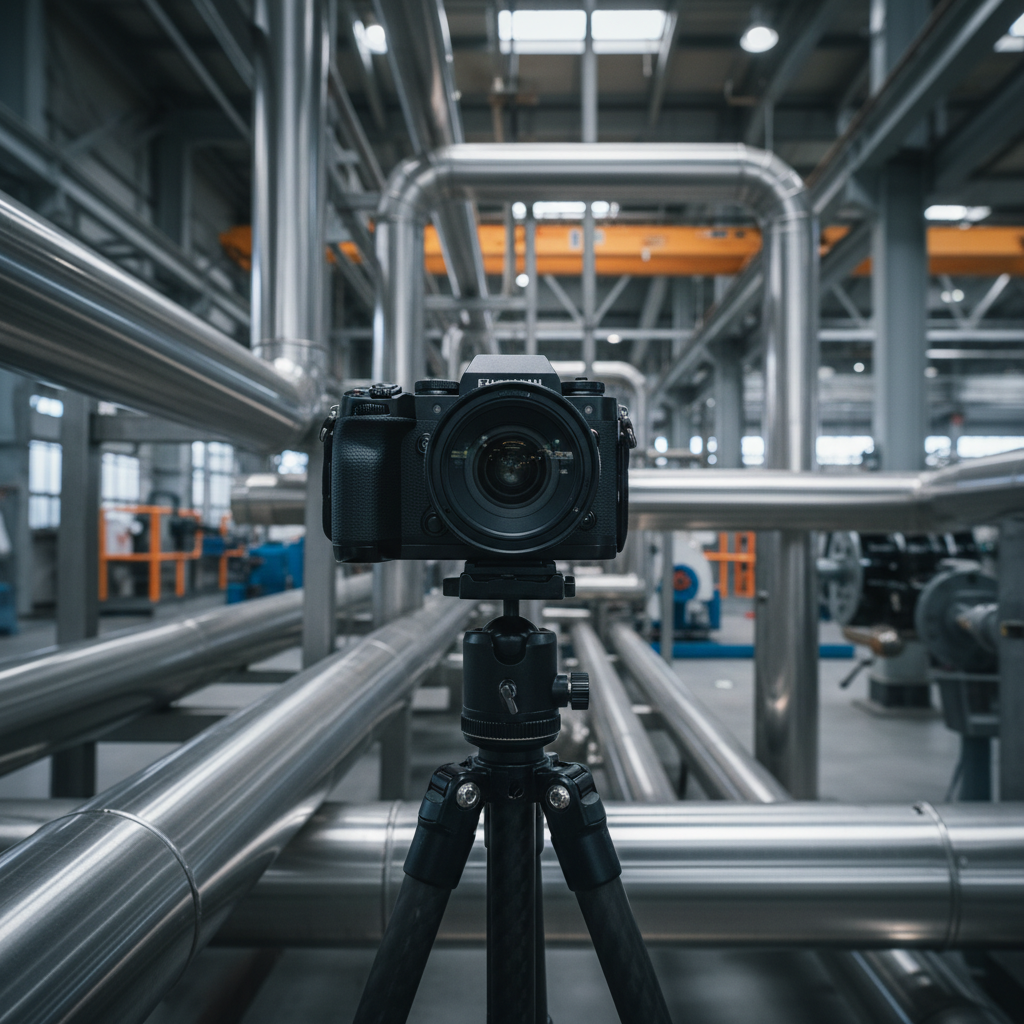
Field kit essentials
- Cameras: Full-frame mirrorless with dependable AF and anti-flicker control.
- Lenses: 24–70 mm and 70–200 mm zooms; a fast 35/50 mm for environmental portraits; macro 90–105 mm for details.
- Filters: Circular polarizer to manage glare on glass, water, paint, and stainless; ND for shallow DOF under bright LEDs.
- Lighting: Battery strobes with grids/softboxes; continuous LED (CRI ≥ 95) with flicker-free modes.
- Stabilization: Tripod with quick leveling, safety tethers, and sandbags; monopod for tight spaces.
- Comms: Hearing protection that supports radio monitoring; labeled call signs and push-to-talk discipline.
- Post: Consistent color profiles, lens corrections, dehaze/clarity for surface readability; exports for web (sRGB) and print (CMYK proofs).
Standardizing gear across commercial and industrial shoots keeps color science and visual language consistent. For motion deliverables on the same day, our video services pair with stills to create short-form clips for internal comms and social posts.
Mid-project storyboarding helps. We often organize shot lists into 3–4 scene blocks (overview, process, people, details) and deliver each as a set. See how we structure narrative coverage across sectors on our portfolio page.
Case Studies and Examples
Industrial visuals work when they respect production realities. These Maple Ridge–area examples show how combining ground coverage with aerials and short-form video turns complex work into assets for sales decks, recruiting, and stakeholder updates—without slowing the job.
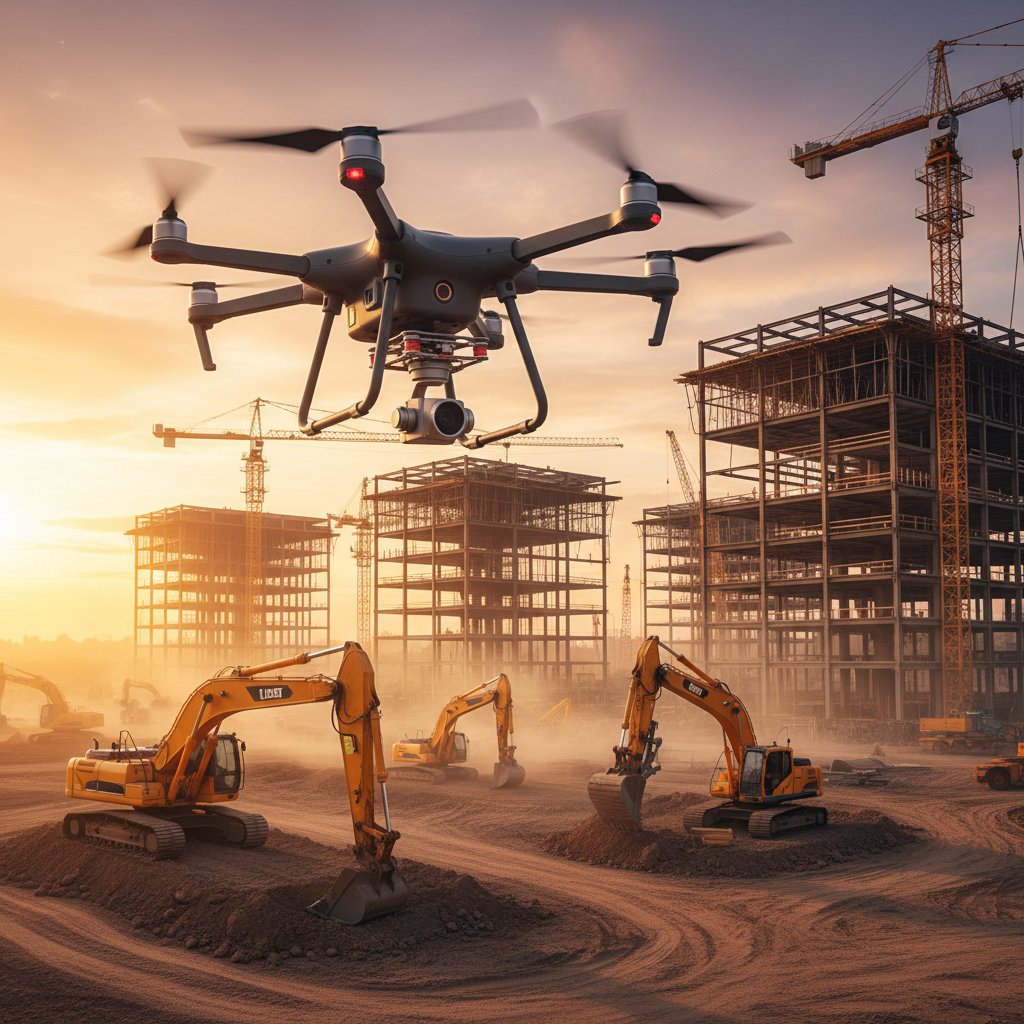
- Surrey construction progress: Monthly ground + drone sets at shift change produced a frame-accurate timeline. Site managers dropped 10–20 selects into board updates and RFQs—no extra tours.
- Langley fabrication line: Polarizers and soft grids revealed welds and ID plates without moving guards. Images became training slides and website hero assets within 48 hours.
- Burnaby logistics hub: Environmental portraits with forklifts and scanners showed teamwork and safety culture, increasing hiring-page engagement and social saves.
Because we also support real estate, restaurants, and commercial spaces, clients consolidate photo, video, drone, and short-form content with one partner—streamlining scheduling and visual standards. Learn more about our approach on the About Us page or reach out directly via Contact.
Frequently Asked Questions
These concise answers address common industrial photography questions on scope, safety, timing, and deliverables. For specialized facilities—labs, utilities, food processing—contact us early so we can align on permits and SOPs before scheduling.
How is industrial photography different from commercial photography?
Commercial photography is a broad umbrella for business imagery. Industrial work is a focused subset documenting real production—machines, processes, and people—under safety constraints. The emphasis is truthful visuals that explain capacity, quality, and sequence rather than lifestyle mood.
Can you photograph during active production?
Yes—if we align on escorts, safety briefings, and staging away from pinch points. We time shots to natural pauses or takt windows. When a stop isn’t possible, we composite sequences in post so the story is clear without interrupting work.
Do we need special PPE for photo crews?
We bring standard PPE and confirm site-specific needs in advance. Typical gear includes hard hats, safety glasses, high-visibility apparel, gloves, and steel-toe boots. If arc-flash or respirator requirements apply, we coordinate with your safety team.
Can you use drones on industrial sites?
Yes, where permitted and safe. We verify airspace, maintain line-of-sight, and coordinate launch/recovery zones with site leads. For indoor or congested areas, we often use ground-based elevated angles or cranes to achieve the same purpose.
Conclusion & Next Steps
Industrial photography turns complex operations into clear, reusable visuals for sales, training, and recruiting. Plan for safety, reflection control, flicker, stabilization, and storytelling, and you’ll get sharper images and smoother shoots—without slowing production or compromising site rules.
Key takeaways
- Clarity builds trust—show process, not just products.
- Safety-first planning keeps shoots efficient and compliant.
- Glare control, anti-flicker settings, and stabilization prevent rework.
- Aerial + ground coverage accelerates stakeholder updates.
- One partner for photo, video, drone, and short-form simplifies campaigns.
Planning checklists from other industries reinforce the value of preflight. A general construction safety overview echoes the need for clear perimeters and communication—principles we apply on every shoot. Likewise, broader security content, such as this industrial security cameras explainer, illustrates how visual programs support safety culture.
Ready to align stakeholders with visuals that work? Book a discovery session in Maple Ridge and we’ll tailor a safe, efficient coverage plan to your shifts and SOPs. Start at our services page to see how photo, video, and drone come together.