

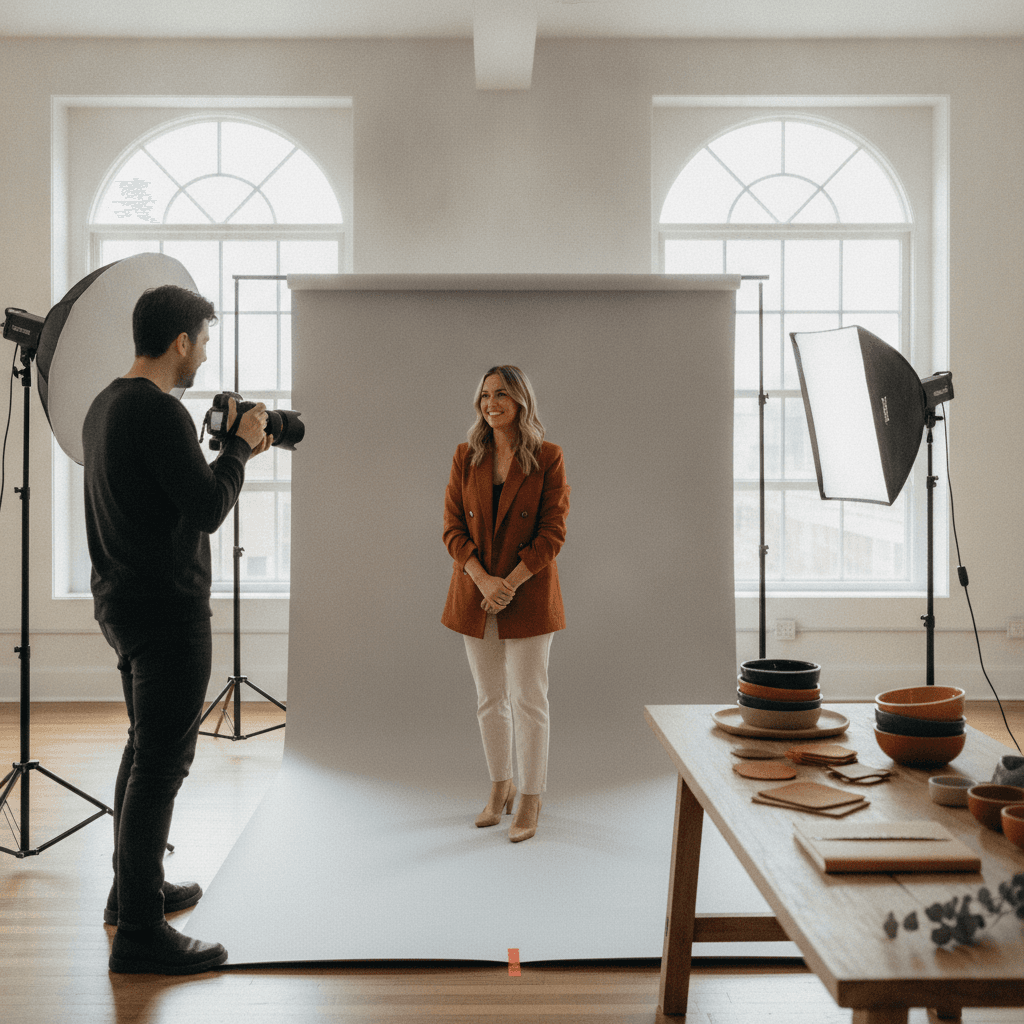
Professional business branding photography is the strategic creation of on-brand images and short-form video that present your people, space, and products consistently across web and social. The investment depends on scope, deliverables, usage, and logistics. In Maple Ridge, strong outcomes come from aligning planning, production, and post with clear brand goals—before shoot day.
By Sumeet S. — Founder & CEO, Silver Valley Studios Inc.
Last updated: July 6, 2026
Above-Fold Hook + TOC
Branding photos pay off when you plan like a campaign, not a one-off shoot. Define outcomes, map deliverables, align usage rights, and schedule pre-production. Then the session runs faster, your asset library works harder, and your brand shows up the same way everywhere—online and in person.
Here’s the thing: you’re not “buying photos.” You’re investing in a visual system your team can reuse for 90 days or more. This complete guide from Silver Valley Studios Inc. shows you how to scope smart, avoid rework, and get more value—without talking specific prices.
- What branding photography is (and how it differs from headshots)
- Why consistency boosts recognition, clicks, and conversions
- How projects run—from brand prep to delivery
- Approaches: studio, on-location lifestyle, social-first vertical video
- Key investment drivers (no numbers, just what actually matters)
- Best practices that stretch your library further
- Tools, checklists, and local Maple Ridge tips
Quick Summary
The true driver of branding photography cost is alignment: scope (hours, locations), team (crew size), complexity (lighting, styling), deliverables (photo + video), and usage rights. Plan the brief, shot list, and publishing calendar up front to maximize each image or clip for 6–12 months.
Think in outcomes and channels first. If you need a homepage refresh, recruiting assets, and 12 weeks of social posts, scope toward that. A focused plan yields 30–60 finished images and 4–10 short vertical clips from a single, well-run day.
What Is Business Branding Photography?
Business branding photography is a planned content session that creates a reusable library of on-brand images and short videos. It covers people, spaces, products, and lifestyle moments so your website, social channels, ads, and print all look consistent and credible.
Brand sessions are bigger than headshots. They include leadership portraits, team interactions, workspace details, product or service workflows, customer moments, and short-form motion for reels and stories. The aim is a cohesive look across 10–20 touchpoints where buyers meet your brand.
- Core outputs: Team portraits, lifestyle portraits, workspace and product details, hero images, and 9:16 clips.
- Formats: Horizontal (web), vertical (reels/stories), square (feeds), and lightweight animated loops for ads.
- Cadence: Many brands refresh quarterly; fast-moving teams update every 6–8 weeks.
At Silver Valley Studios Inc., we combine HDR photos with cinematic 4K video and vertical video so your brand kit works across homepage banners, landing pages, Instagram, TikTok, and email—without constant re-edits.

Why Branding Photography Matters
Consistent visuals raise recognition and reduce buying friction. When your website, listings, and social feeds share the same look, people decide faster and remember longer—especially on mobile where attention spans are short.
Here’s why thoughtful branding photography moves the needle for Maple Ridge businesses, from pro services to restaurants and fitness studios.
- Recognition builds trust: A unified color palette and lighting style make your brand feel reliable across 10–20 touchpoints.
- Content velocity: One well-planned day often yields 30–60 images and 4–10 micro-videos for a 90‑day calendar.
- Platform fit: Vertical video improves watch time on mobile; lifestyle stills anchor website hero sections and bios.
- Team alignment: Sales and social teams pull from the same approved library, cutting ad-hoc requests and rework.
When we produce brand kits for Maple Ridge restaurants and small businesses, we design four content lanes—hero people, ambiance, detail macros, and motion moments—so every post and page looks like it came from one playbook.
A clear creative brief speeds decisions and reduces reshoots. For a practical template, see the guidance from Shopify’s creative brief resource, which outlines goals, audiences, and must-have shots in a concise format.
How a Branding Photography Project Works
Great brand shoots follow four phases: discovery, pre-production, production, and post. Each phase locks clarity on goals, logistics, and usage so the day runs smoothly and your assets arrive on time—ready to publish across channels.
Our real estate media discipline—tight timelines, HDR images, cinematic tours, and drone—translates directly to brand work. The process below is how we keep sets moving and quality consistent.
Discovery and Strategy (Week 0)
Start with the outcome, not the calendar. Clarity here drives everything downstream.
- Document goals: website refresh, launch campaign, recruiting push, or always-on content drip.
- Define the audience and 3–5 key messages you want visuals to reinforce.
- Audit current visuals: what to keep, fix, or retire based on performance.
- Identify channels: homepage, landing pages, Instagram, TikTok, email, print.
Pre-Production (Week 1)
Preparation is your speed multiplier. Lock details early to reduce resets later.
- Write a one-page brand brief: palette, typography, references, dos/don’ts, and accessibility notes.
- Build a prioritized shot list: 25–60 shots spanning people, space, product, and lifestyle.
- Confirm logistics: locations (1–3), permits, wardrobe, hair/makeup, props, and timeline blocks.
- Plan social-first capture: list 4–10 vertical clips you’ll shoot alongside stills.
If motion is a big part of your plan, adapt the structure from Shopify’s video brief to keep story beats and deliverables clear for short-form content.
Production Day
Treat the day like a relay race. Each setup hands cleanly to the next.
- Lighting: combine natural light with controlled strobe/continuous for consistent skin tones.
- Scene cadence: portraits → lifestyle interactions → product/space details → team groups.
- Social capture: record vertical b‑roll at every setup for reels and stories.
- Timeboxing: review selects every 60–90 minutes to confirm must-haves are covered.
Post-Production (Week 2)
Editing converts raw capture into a library your team can use without handholding.
- Selection: cull to the strongest 30–60 images for range and consistency.
- Editing: HDR blending where needed, color harmony, skin retouch, perspective corrections.
- Delivery: web-ready JPGs, print-ready files, and vertical clips in 9:16 with clean in/out points.
- Handoff: file naming, usage notes, and a 12‑week publishing map.
Professional videography amplifies a brand’s story across platforms. For context on how motion elevates marketing outcomes, see this overview from TechWyse on videography’s impact across awareness and engagement.
Types, Methods, and Approaches
Choose an approach that matches your audience and channels. Most sessions blend studio portraits for polish, on-location lifestyle for authenticity, and social-first vertical video for reach—so each scene does double duty.
We scope with lanes. Each lane supports a specific message and format, keeping the look cohesive without repeating the same pose or angle.
Studio Portraits
Control is the point. You get consistent backgrounds, flattering light, and efficient throughput for teams.
- Seamless backdrops with subtle gradients echo brand colors without distraction.
- Ideal for leadership sets, LinkedIn upgrades, media kits, and evergreen bios.
- Throughput: 8–20 people per session with minimal downtime.
On-Location Lifestyle
Context sells. Show work happening in real spaces—shops, gyms, clinics, offices.
- Blend natural light with soft fill for believable, flattering skin tones.
- Capture actions: serving a customer, collaborating, prepping an order, coaching a class.
- Scout 2–4 micro-locations per site: entrance, counter, workspace, exterior.
Social-First Motion
Short, vertical, loopable clips power reach on mobile. Design them on purpose.
- Capture 4–10 micro-videos (6–20 seconds) per location for reels, shorts, and stories.
- Favor 9:16 framing; open with a visual hook in the first 1–2 seconds.
- Plan for silent autoplay: rely on visuals; add captions in-platform.

Environmental Product + Space
Details people remember. Textures, signage, plating, tools—these become your visual vocabulary.
- Deliver 10–20 close-ups for hero sections, carousels, and ads.
- Great for restaurants, studios, and commercial spaces to show craft and ambiance.
- Use consistent angles so grids feel designed, not random.
Drone and Aerial Context
When location is a selling point, aerials communicate scale and access in seconds.
- Establish exterior context—storefront, parking, nearby amenities, and surroundings.
- Pair a 10–20 second aerial sweep with your website hero section.
- Follow local rules and schedule for low-wind windows.
Branding Photography Pricing Factors (No Numbers)
Branding photography investment is driven by scope, complexity, deliverables, and rights—not a flat “hourly” number. Align these four levers with your goals and you’ll build a library that works across channels for months.
Instead of hunting for a one-size-fits-all price, decide what outcomes you need and back into the logistics. Here are the variables that actually move investment up or down—without listing dollar figures.
- Scope: Session length, crew size (photographer, assistant, HMU), number of locations, and travel.
- Complexity: Lighting builds, set styling, prop sourcing, permits, staging resets, and specialty gear.
- Deliverables: Count of edited images, retouching level, vertical clips, and any simple motion graphics.
- Usage rights: Organic channels vs. paid ads, print, out-of-home, or packaging.
- Speed: Rush turnarounds, same-day selects, or phased delivery windows.
For example, a Maple Ridge restaurant relaunch might target a 30‑day posting plan: 45 edited images, 8 micro-clips, and a refreshed hero set—shot in kitchen, dining room, and patio at golden hour. Different outcome, different scope.
Comparison: Approach vs. Value Impact
| Approach | Primary Strength | Best Used For | Value Multiplier |
|---|---|---|---|
| Studio Portraits | Consistency, speed | Leadership, recruiting, press | High for evergreen needs |
| On-Location Lifestyle | Authenticity, story | Web hero, social carousels | High for engagement |
| Social-First Motion | Reach, watch time | Reels, ads, stories | High on mobile |
| Drone Aerials | Context, scale | Storefronts, campuses | Medium (situational) |
Best Practices to Maximize ROI
The simplest way to stretch your brand library is to over-prepare. Lock your shot list, assign roles, and stage 2–4 micro-sets per location so the crew can move fast and capture variety without re-lighting from scratch.
Preparation isn’t busywork—it’s leverage. Do these things and you’ll capture more usable images and clips in the same window of time.
- Yardstick visuals: Collect 8–12 references your team agrees on; use them to align lighting and framing.
- Wardrobe grid: 2–3 outfits per person; avoid tiny patterns and busy logos; bring layers for quick variety.
- Prop bins: Pack 10–15 brand-colored objects for depth and texture across sets.
- Order of day: Book time-sensitive shots first (sunlight, kitchen prep, rush-hour exteriors).
- Approval flow: Nominate one on-site decider; hold 60–90 minute reviews to stay on track.
Need more social performance from the same shoot? Pair every stills setup with a 6–10 second vertical clip. Our social media content guide explains how to storyboard reels so you leave with 6–10 usable clips from one day.
Local considerations for Maple Ridge
- Plan golden-hour exteriors near Maple Ridge Park for warm, scenic light that flatters storefronts and team portraits.
- Peak summer weekends get busy at WildPlay Maple Ridge; schedule early mornings or weekdays to avoid crowds in backgrounds.
- For restaurants, coordinate with service lulls; we stage food and ambiance shots between prep and dinner to keep operations smooth.
Free planning consult: If you’re mapping a 90‑day content engine, our team can help translate your goals into a right-sized scope. Explore our approach in this branding visuals primer, then reach out via our site.
Tools, Checklists, and Resources
Use a lightweight toolkit: a one-page brief, a prioritized shot list, a publishing calendar, and a simple rights tracker. These four tools keep teams aligned and help you measure what’s working after launch.
Simple beats complex. Keep tools short so people actually use them on busy days.
- One-page brand brief: Six blocks—audience, mood, palette, locations, must-have shots, must-avoid shots.
- Shot list: Categorize by people, space, product, lifestyle; rank P1–P3 and note vertical video moments.
- Publishing calendar: 12-week grid; map hero images, carousels, and 6–10 reels with owners and dates.
- Rights log: Track usage (organic, paid, print) and model releases by filename; note license end dates.
- File naming: brand_campaign_YYYYMMDD_sequence_v1.jpg for easy retrieval and versioning.
We often pair brand sessions with our real estate workflows: HDR photos for balanced interiors, cinematic 4K video for hero moments, and vertical video for social. Learn how we treat story and lighting in our commercial photography guide.
Mini Case Studies and Examples
Real outcomes happen when brand goals and deliverables align. These Maple Ridge–area scenarios show how we scope for impact without chasing shot counts—and how a single day fuels 30–90 days of content.
Restaurant Relaunch (Ambiance + Social)
Relaunches need crave-worthy visuals and quick posting cadence.
- Goal: Drive table bookings and story shares within 30 days.
- Scope: Dining room, bar, patio; chef portraits; 12 hero dishes; 6 ambiance clips.
- Outputs: 50 images, 8 verticals; website hero, menu highlights, weekly reels.
- Result: Higher saves and shares; consistent lighting across dishes and interiors for a cohesive grid.
For menu and interiors, we treat it like real estate: HDR for balance, clean color, and minimal glare. Explore our portrait approach for chef features that feel approachable yet premium.
Fitness Brand (Team + Lifestyle)
Fitness decisions are emotional. People buy into coaches and community.
- Goal: Grow trials and PT inquiries over 8 weeks.
- Scope: Coach portraits, class action, equipment macros; outdoor set for seasonality.
- Outputs: 40 images, 6 reels; landing-page hero plus email nurture visuals.
- Result: Sharper value props; stronger first impression on mobile with vertical-first design.
We storyboard 6–10 micro-videos tied to your offers, then cut them for reels and shorts. Our photography + social guide shows how to map posts to the next CTA.
Professional Services (Polish + Trust)
Credibility hinges on consistency. Mixed lighting and mismatched crops send the wrong message.
- Goal: Refresh website and recruiting collateral in 14 days.
- Scope: Studio headshots for 12, environmental portraits for 6, office walk-through.
- Outputs: 36 images, 4 micro-clips; careers page, LinkedIn updates, press kit.
- Result: One consistent face of brand; easier press pickups with ready-to-use art.
Want the same polish on property pages? See our commercial property picture guide for how we light interiors and manage reflections that often derail DIY attempts.
Frequently Asked Questions
Most questions fall into planning, production, and post. Prepare your team, confirm locations, and align usage rights before the shoot for the smoothest experience and the strongest library of images and clips.
How long does a branding session usually take?
Most sessions run half day to full day, depending on locations, outfits, and the number of people involved. Plan buffers for travel, wardrobe changes, and set resets. When the shot list is tight and roles are clear, crews move faster and capture more variety.
What deliverables should I expect from a professional shoot?
Expect a curated set of edited images sized for web and print, plus short vertical clips if motion is included. You should also receive a basic usage summary, file-naming conventions, and recommendations for publishing across website, social, and ads.
Do I need a shot list, or can we improvise on the day?
A prioritized shot list is essential. It keeps the day on track and ensures you capture mission-critical moments before energy fades. There’s still room to improvise—especially once the must-haves are locked—so you get unexpected frames without missing the plan.
What should our team wear on camera?
Aim for solids in your brand palette, avoiding tiny patterns and busy logos. Bring 2–3 options per person, with layers for quick variety. Shoes and accessories matter—full-length moments appear in lifestyle scenes more often than people expect.
Should we shoot in a studio or on location?
It depends on your audience and channels. Studio delivers polish and throughput; on-location delivers story and authenticity. Many brands do a hybrid: studio portraits for consistency and lifestyle scenes in real spaces for context.
Key Takeaways
Plan first, then produce. When deliverables, rights, and logistics align with your goals, branding photography becomes a reusable library that powers websites, social content, and ads for months without constant reshoots.
- Outcome-driven scoping beats chasing low line items.
- Combine portraits, lifestyle, details, and short motion for reach.
- Prep unlocks speed; speed creates variety without extra hours.
- Rights hygiene prevents rework and unlocks paid campaigns.
Conclusion and Next Steps
If you align goals, deliverables, and rights, your brand session pays off in saved time and stronger results. Treat it as a 90‑day content engine, not a one‑day task—and your visuals will keep working across channels.
Ready to plan a brand library that actually moves the needle? Our Maple Ridge team builds end-to-end visuals—HDR photos, vertical and cinematic 4K video, and on-brand editing—for businesses that want consistent, high-performing content. Review our realtor branding overview or our commercial photography guide, then reach out. We’ll scope a right-sized plan and book your ideal window.