

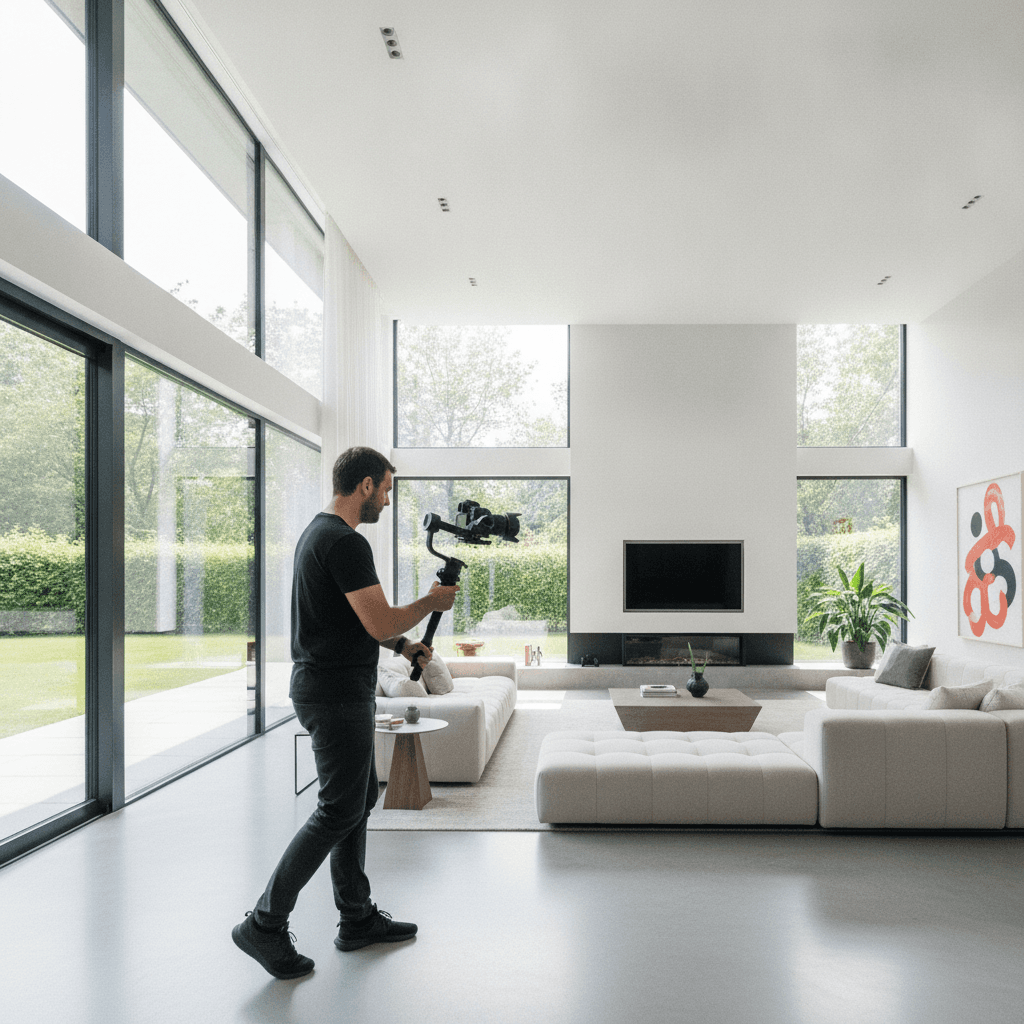
Last updated: October 2026
Key takeaway:Cinematic video uses intentional composition, camera movement, lighting, sound, and editing to show how a property or brand space feels, not merely what it contains. For Maple Ridge listings, the strongest approach combines a clear walkthrough with purposeful reveals, accurate room scale, natural sound, and versions sized for listing pages and social platforms.
By Sumeet S. - Founder & CEO, Silver Valley Studios Inc.
Last updated: 2026-10-29
What this cinematic video guide covers
Cinematic video is a storytelling method rather than a single camera, lens, frame rate, or editing preset. A professional property film still needs to be useful: viewers should understand the layout, proportions, finishes, outdoor connection, and location context before they decide whether to book a showing.
This guide explains how to plan a cinematic video tour, choose camera movement, manage bright windows, record useful sound, edit for different platforms, and decide when drone footage adds value. It is written for realtors, developers, restaurants, and small businesses in Maple Ridge and the surrounding Lower Mainland.
- What cinematic video means in practical production terms
- When a cinematic approach is useful for a listing or brand
- How to plan a shot list and schedule
- How gimbal, drone, detail, and lifestyle shots work together
- How to prepare a master film and social cutdowns
- How cinematic video differs from a straightforward walkthrough
- Questions to ask before booking a production
What is cinematic video?
Cinematic video is deliberately designed motion content. It combines composition, controlled movement, lighting, pacing, colour, and sound so the viewer can understand a subject while also forming an impression of its atmosphere. In real estate videography, that usually means guiding someone through a home in a logical sequence rather than recording disconnected pans of every room.
The word “cinematic” does not guarantee a particular resolution or camera brand. A polished 4K file can still feel flat if the route is confusing, windows are overexposed, or every shot moves at the same speed. Conversely, a shorter production can feel cinematic when each shot has a clear purpose and the edit respects the space.
Recognisable characteristics
- Intentional composition: Doorways, architectural lines, windows, and leading edges direct attention without hiding the room.
- Purposeful movement: A gimbal push, reveal, or lateral move explains flow instead of adding motion for its own sake.
- Consistent exposure: Interior brightness, practical lights, and windows are balanced so the viewer can read important details.
- Natural pacing: Shots last long enough to establish scale, with faster inserts reserved for details and transitions.
- Sound that supports the scene: Room tone, exterior ambience, footsteps, and carefully selected music create continuity.
- Platform-ready delivery: The master film can be adapted for a listing page, YouTube, Instagram, or vertical short-form content.
Why cinematic video matters for Maple Ridge listings and local brands
A property video gives prospective buyers another way to judge layout and atmosphere before arranging a visit. Still photographs are essential for detail and comparison, while motion can demonstrate how the entry connects to the kitchen, how a room opens toward a patio, or how a commercial space feels when people move through it.
For Maple Ridge homes, the surrounding setting can be part of the story. Tree-lined streets, mountain views, yards, decks, and indoor-outdoor transitions may deserve brief context, provided the film remains accurate and does not substitute mood for useful information. For restaurants and businesses, the equivalent may be the relationship between the frontage, service area, seating, products, and customer experience.
Choose the format according to the decision
| Need | Useful video treatment | What the viewer should learn |
|---|---|---|
| Understand a home’s layout | Stabilized walkthrough with logical room order | How spaces connect and where key features are located |
| Show a large lot or view | Short aerial establishing shot followed by ground footage | How the property relates to its surroundings |
| Highlight craftsmanship | Controlled detail shots and slower inserts | Which finishes, fixtures, or construction details deserve attention |
| Reach social viewers | Vertical recut with an immediate visual hook | Why the property or brand is worth exploring further |
The goal is not to make every production longer. It is to select shots that answer the audience’s next question and remove footage that only repeats what the viewer already knows.
How to plan, film, and edit a cinematic video
A reliable production has three connected stages: preproduction, filming, and post-production. Decisions made before the camera is turned on affect the schedule, the available light, the movement path, and the usefulness of the final edit.
1. Preproduction: define the story and route
Start with the business objective. A listing may need a concise hero tour that communicates flow, while a developer may need repeatable footage of finishes and community context. A restaurant may need several short pieces showing preparation, service, atmosphere, and signature dishes.
- Identify the audience and the action you want them to take.
- List five to seven priority features rather than trying to make every feature equally important.
- Map a route through the property so the edit does not jump randomly between rooms.
- Schedule interiors when window brightness is manageable and exteriors when the light supports the subject.
- Prepare the space: open blinds consistently, turn on practical lights, remove distracting cords, and keep styling consistent.
- Confirm access, parking, occupants, pets, quiet periods, and any building or strata requirements.
For a Maple Ridge shoot, weather can change the plan quickly. A flexible schedule helps protect exterior footage while still allowing the interior story to be completed if rain or low cloud affects the original timing.
2. Production: capture movement with a purpose
Begin with stable establishing shots and build toward the strongest feature. A gimbal walk-in can establish the entry and living area; a lateral move can explain a kitchen’s relationship to dining; a controlled push can isolate a finish or view. The operator should know where the shot starts, what it reveals, and where it ends before moving.
For a natural film look, many productions use 24 frames per second with a shutter near 1/48 second. That is a production choice, not a requirement. The important principle is consistency: movement, shutter, exposure, and focus should suit the pace and lighting of the scene.
Record room tone and exterior ambience whenever possible. Even when music carries the edit, a small amount of authentic sound can make transitions feel less artificial. If an agent or business owner speaks on camera, record clean voice audio separately from general room sound.
3. Post-production: make the sequence easy to follow
The edit should establish context early, then move through the subject in a way that feels deliberate. A 45- to 90-second listing film may use three- to five-second beats, but shot length should follow the information being shown rather than an inflexible rule.
- Select a clear opening: exterior context, entry reveal, or the property’s strongest visual feature.
- Cut between wide views, medium movement, and detail inserts so the viewer understands both scale and finish.
- Match exposure and white balance across rooms before applying a restrained creative grade.
- Keep transitions motivated by movement, architecture, or music rather than adding effects to every cut.
- Mix music, voice, and ambience so speech remains intelligible and the soundtrack does not overpower the property.
- Export a high-quality master, a web-friendly version, and platform-specific crops where needed.
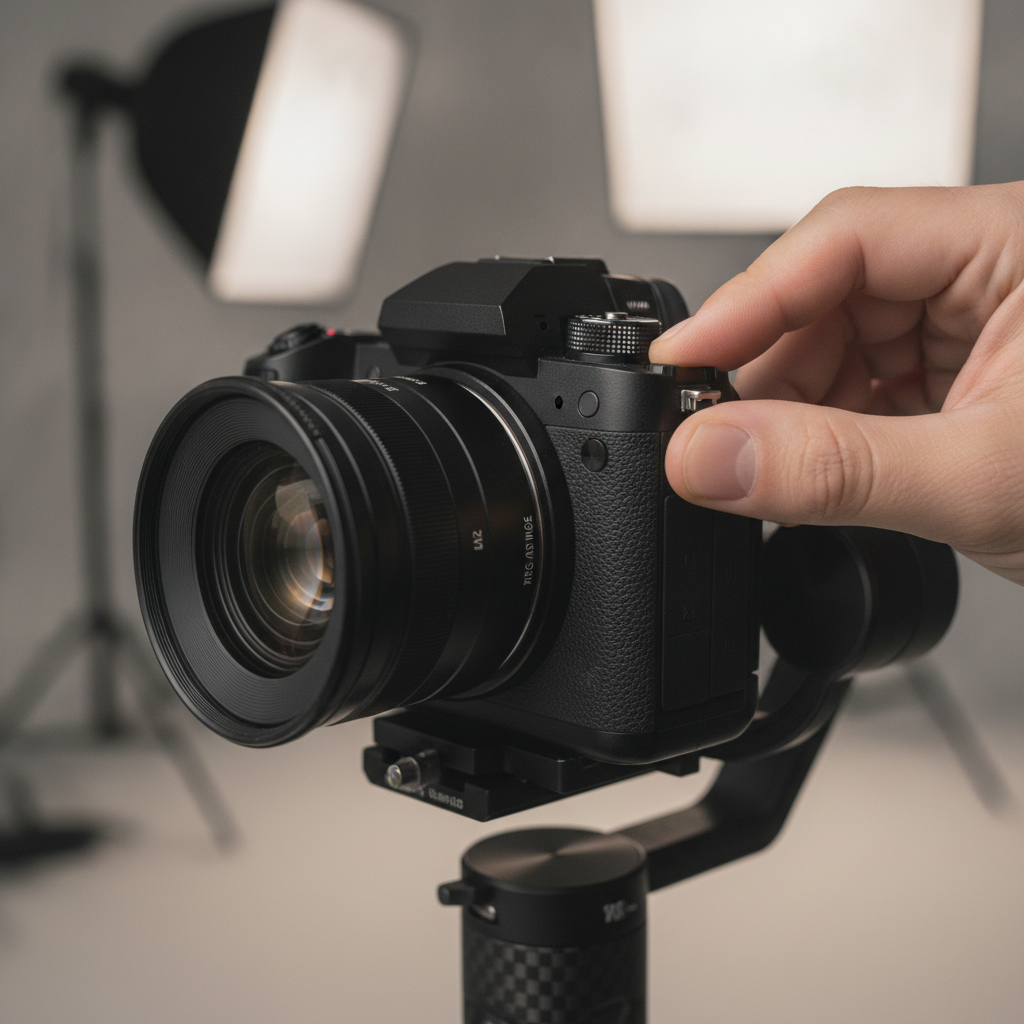
Cinematic video approaches that work for property and brand content
Stabilized walkthroughs
Gimbal footage is useful when the viewer needs to understand flow. Keep the camera at a natural height, move at a controlled pace, and avoid turning corners so quickly that the audience loses orientation. A short pause at important rooms gives the editor a clean point for a cut.
Drone establishing shots
Aerial footage can show a large lot, a view, a shoreline, a development, or the relationship between a business and its setting. It should be brief and relevant. For privacy-conscious operation, review Transport Canada’s privacy guidance for drone operators before capturing identifiable people or neighbouring properties.
Detail and lifestyle inserts
Close-ups of fixtures, textures, food preparation, signage, or hands interacting with a space add variety. They should support the main story rather than create an unrealistic impression. A lifestyle action works best when it reflects the actual use of the property or brand environment.
Vertical social cutdowns
A vertical version should be edited as its own piece, not simply squeezed into a narrow frame. Place the strongest visual early, keep important details away from interface overlays, and use captions when the message depends on spoken words. A short cut can invite viewers to watch the complete tour without trying to include every room.
Best practices for lighting, composition, sound, and editing
Control bright windows without flattening the room
Expose carefully for highlights, use neutral or variable-density filters where appropriate, and add soft fill when the interior falls too dark. Practical lamps can provide warmth and depth, but mixed colour temperatures should be managed so walls and finishes do not shift noticeably between shots.
Compose for truthful scale
Wide lenses help show interiors, but extreme perspective can make rooms appear larger than they are. Keep vertical lines controlled, avoid placing the camera too close to corners, and include familiar architectural references when scale matters. A cinematic treatment should make a space inviting without misrepresenting it.
Give movement a beginning and an end
Start and finish each move on a usable composition. This gives the editor options and prevents a sequence from feeling like an accidental camera drift. Slow down when showing layout; reserve speed ramps or rapid cuts for moments where they add clear emphasis.
Design sound rather than hiding it
Room tone helps join shots from different parts of a property. Footsteps, doors, water, kitchen activity, or street ambience can provide realism when recorded cleanly and used sparingly. Music should match the subject and leave enough space for any narration or natural sound.
Production tools and delivery decisions
Gear supports the process, but it does not replace planning. A capable mirrorless camera, a wide lens for interiors, a general-purpose zoom for details, stabilization, exposure control, and dependable audio can cover many property and brand assignments.
- Camera: Choose a body that records a robust file suitable for the intended colour workflow.
- Lenses: Use a wide lens carefully for rooms and a normal or telephoto option for details, people, and compressed views.
- Stabilization: A three-axis gimbal is useful for walking routes; a tripod or slider may be better for a precise detail.
- Filters and support: ND filters, spare batteries, media, microfiber cloths, and reliable support protect the schedule.
- Audio: Carry a way to record ambience and a separate microphone for any spoken introduction.
- Post-production: Use an editor that supports colour correction, audio mixing, captions, reframing, and multiple export sizes.
Before a shoot, confirm the deliverables: master resolution, listing version, vertical cut, captions, music licensing, turnaround expectations, and revision process. Clear deliverables prevent a technically impressive film from being unsuitable for the place where it will be published.
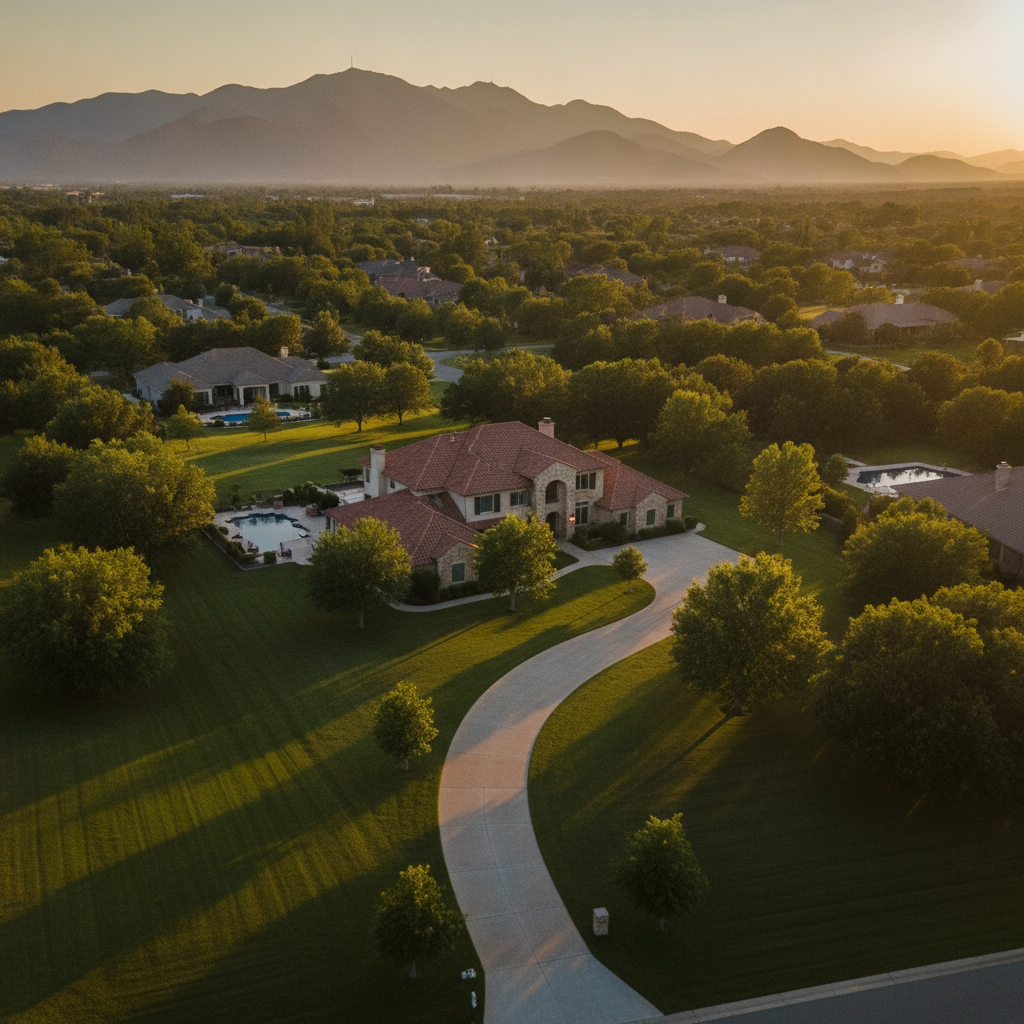
Cinematic video versus a standard walkthrough
Both formats can be useful. A standard walkthrough prioritizes efficient documentation, while cinematic video adds more planning, controlled movement, sound design, and editorial structure. The right choice depends on the audience, property, campaign, and available production time.
| Consideration | Cinematic video | Standard walkthrough |
|---|---|---|
| Primary purpose | Communicate flow, atmosphere, and key selling points | Document rooms and features efficiently |
| Movement | Planned gimbal, slider, or aerial reveals | Simple handheld, tripod, or direct camera movement |
| Lighting | Exposure and practical lights are deliberately managed | Mostly existing light with limited adjustment |
| Sound | Music, ambience, room tone, and optional narration | Basic camera audio, narration, or no designed soundtrack |
| Editing | Story arc, visual rhythm, colour correction, and cutdowns | Linear sequence with fewer editorial layers |
| Best fit | Hero marketing, premium listings, brand storytelling | Fast documentation and supporting information |
Some campaigns benefit from both: a polished hero film for attention and a simpler information-led version for viewers who want a complete room-by-room reference.
Distribution and package planning
Plan the destination before filming. A listing page may favour a horizontal master, while social channels may need a vertical cut with captions. A website can host a fuller tour, whereas a short feed video needs to communicate its reason for watching almost immediately.
Pairing video with still photography and a 2D floorplan can answer different buyer questions. The video communicates sequence and atmosphere; photographs preserve detail; the floorplan clarifies relationships and dimensions. Silver Valley Studios describes its broader real estate photography approach for teams planning a coordinated property media package.
For agents who will appear on camera, a consistent introduction, clear delivery, and comfortable pacing may matter as much as the property footage. A separate realtor videographer guide can help with on-camera preparation and personal-brand video planning.
Frequently asked questions about cinematic video
How long should a cinematic real estate video be?
A focused listing film is often around 45 to 90 seconds, depending on the property and the number of features that need context. The final duration should follow the story rather than a fixed target. Short vertical teasers can be created separately for social distribution.
Does every property need drone footage?
No. Aerial footage is most useful when lot size, views, access, landscape, or neighbourhood context affects the decision. If those factors are not important, strong ground footage may communicate the property more clearly and efficiently.
What frame rate is best for cinematic video?
Many productions use 24 frames per second for a familiar film-style motion cadence and reserve higher frame rates for selected slow-motion shots. Frame rate should be matched with shutter speed, lighting, movement, and the intended delivery platform rather than treated as a quality guarantee.
How can bright windows be kept from appearing white?
Plan the schedule, expose with highlights in mind, use appropriate ND filtration, and add controlled fill when necessary. Consistent white balance and careful colour correction also help preserve the appearance of windows, walls, and finishes across the edit.
Conclusion
Cinematic video works when creativity serves clarity. A planned route, truthful composition, controlled light, purposeful movement, clean sound, and platform-specific editing can help a viewer understand both the space and its atmosphere. For Maple Ridge real estate and local brands, the strongest production is the one that turns genuine features into an easy-to-follow visual story.
Before booking, define the audience, priority features, filming conditions, deliverables, and intended platforms. That preparation makes it easier to choose between a cinematic hero film, a straightforward walkthrough, vertical cutdowns, aerial coverage, or a coordinated package of video, photographs, and floorplans.
Plan your cinematic video with Silver Valley Studios
Contact Silver Valley Studios to discuss cinematic property video, real estate videography, and brand content for Maple Ridge and surrounding British Columbia service areas.