


Real estate photography planning guide
Real Estate Photography Checklist for Every Listing
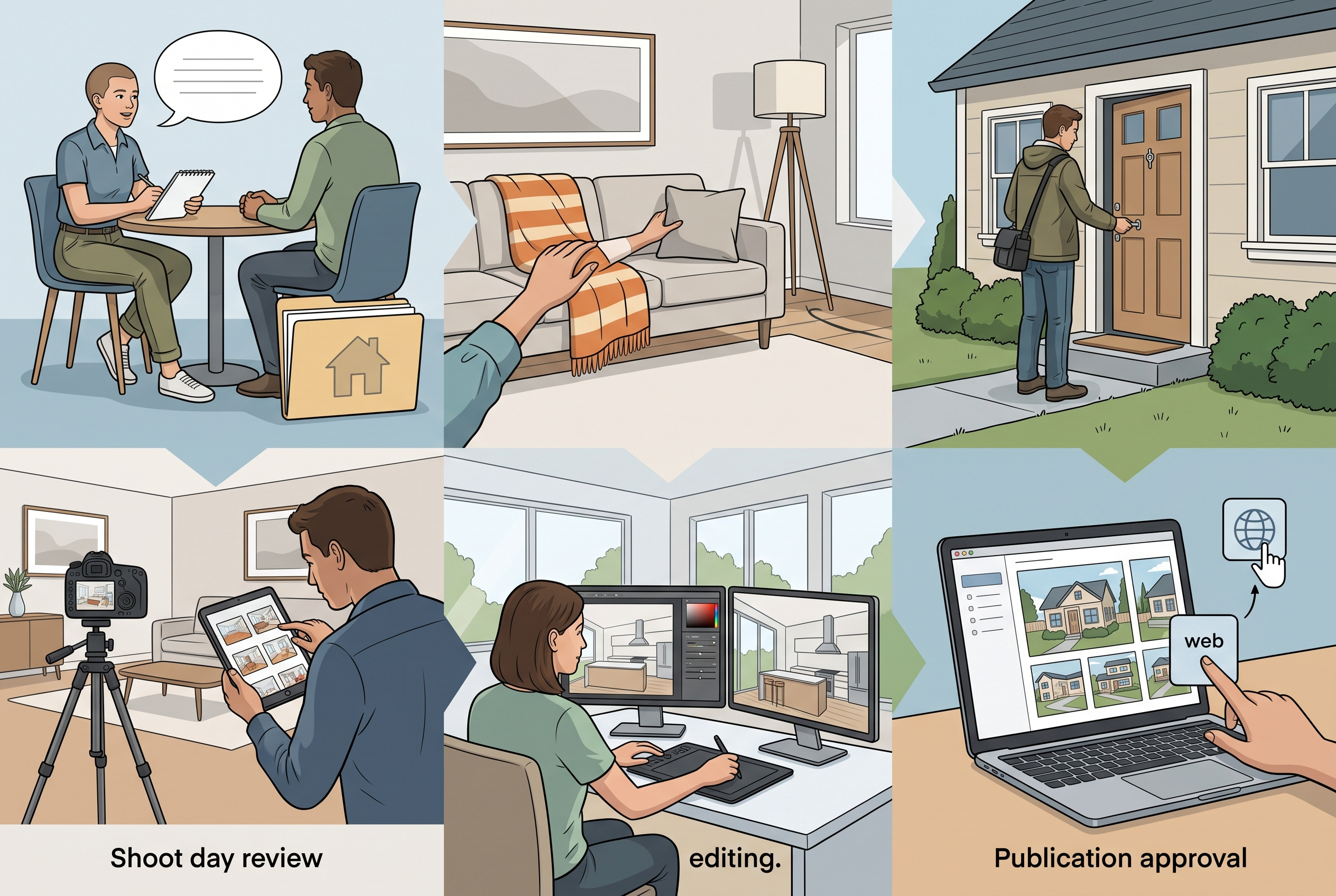
Short answer: A reliable listing-photo plan has four checkpoints: agree on the media scope, prepare the property without hiding material facts, control access on shoot day, and review every image against the current property before publication. The photographer, seller and real estate professional should know who decides what is photographed, edited, delivered and approved.
A photo session can be delayed by a locked room, an unreported tenant, a vehicle in the driveway or a misunderstanding about which spaces belong in the listing. It can also create a larger problem when an image makes the property look materially different from reality. This checklist is built for agents and sellers who want an orderly handoff from booking to publication. It does not assume a particular package, turnaround time, service area or editing style from Silver Valley Studios.
Set the listing and media brief before styling rooms
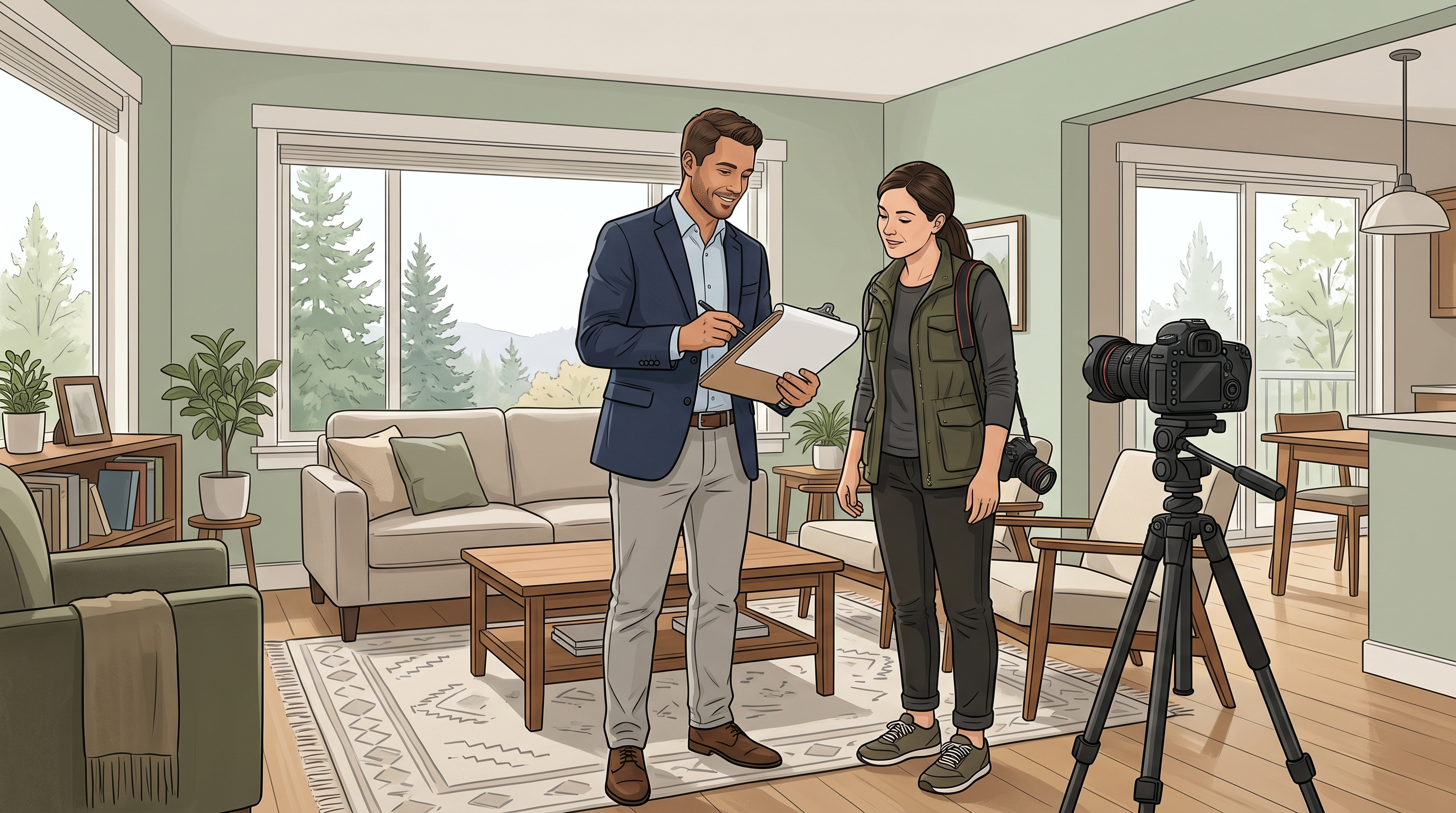
Begin with the marketing decision, not a generic room-cleaning list. Identify the property type, current occupancy, listing date, expected publication channels and the features the real estate professional has verified. Decide whether the goal is a complete listing set, a smaller rental package, a pre-market update or another use. The photographer needs enough context to plan the sequence, but factual claims about square footage, legal suites, views, renovations or neighbourhood amenities remain the responsibility of the appropriate listing professional.
Walk through the property with the seller and mark spaces that are included, excluded, unsafe, unfinished or unavailable. Identify mirrors, artwork, family photographs, security screens, licence plates and documents that could reveal private information. Ask before moving personal or fragile items. A photographer should not be expected to decide which possessions may be handled or whether a feature is legal.
- Confirm the address, unit, access contact and property type.
- List all interior, exterior and shared spaces proposed for photography.
- Record features that require factual verification before captions are written.
- Identify privacy, tenant, pet and safety constraints.
- Name the person who can approve a change to the shot plan.
Confirm the photography scope and usage in writing
“Real estate photography” can refer to still images alone or a wider media assignment. Ask which assets are actually included, how many spaces are covered, whether exterior, amenity, dusk, aerial, video, floor-plan or virtual-tour work is separate, and which conditions could change the appointment. Do not infer inclusions from a portfolio example.
Confirm the licensing or usage terms for the agent, brokerage, seller, builder, designer or another party that may want the files. Ask whether a later reuse, transfer or commercial campaign needs permission. Determine the delivery method, file formats, orientation, resolution and naming convention needed by the listing system and other approved channels. Obtain the current turnaround estimate and revision process directly rather than relying on an older web page or a previous job.
| Scope field | Question to settle | Record |
|---|---|---|
| Spaces | Which rooms, exteriors and amenities are included? | Room-by-room shot list |
| Media | Are stills, video, aerial, plans or tours separate? | Named deliverables |
| Use | Who may publish the files, where and for how long? | Usage terms |
| Timing | What appointment and delivery windows apply? | Written schedule |
| Changes | How are weather, access, reshoots and revisions handled? | Current policy |
Silver Valley Studios publishes a services page and portfolio. Use them to define questions, then ask the studio which current deliverables and terms apply to the exact listing.
Prepare each space to show its current condition clearly
Preparation should reduce distraction without inventing a different property. Clean visible surfaces, floors, glass and fixtures; remove rubbish and excess countertop items; make beds; straighten window coverings; replace burned-out bulbs; and contain cords where this can be done safely. Keep a small basket available for last-minute personal items, then remove that basket from the photographed room rather than moving it repeatedly into the next frame.
Open access to the electrical panel, mechanical room or storage only when those spaces are part of the agreed plan and safe to enter. Do not conceal water staining, damage, missing fixtures or another material condition for the photograph. Ask the listing professional how a temporary or personal item should be handled. Physical repairs and staging decisions belong before the appointment, not in post-production.
- Complete repairs and deep cleaning before the photographer arrives.
- Remove confidential documents, prescriptions, keys and personal photographs.
- Set chairs, stools and movable décor consistently.
- Check every light and decide whether window coverings will be open or closed.
- Secure pets away from equipment, doors and the photographer’s path.
- Leave only agreed items in sinks, showers, fireplaces and outdoor features.
For occupied properties, give residents a clear deadline and a short list that distinguishes necessary preparation from optional styling. For vacant properties, confirm utilities, lighting, temperature, elevator access and whether furniture or staging is present. Never advertise virtual staging or digitally added contents as if they were physically present without the listing professional confirming the applicable disclosure and platform rules.
Plan exterior conditions, weather and building access
Exterior photographs depend on more than sunshine. Move permitted vehicles, bins, hoses and temporary signs; mow or sweep where appropriate; unlock gates; and identify property boundaries that should not be guessed. Tell the photographer about construction, seasonal features, shared driveways, strata rules, security desks, elevator bookings or restricted common areas.
For apartments or strata properties, obtain permission for amenities and confirm the route between parking, lobby, unit and shared facilities. Do not let the photographer follow residents through a secure door or enter a space without authorization. For tenanted properties, the agent or owner must handle lawful notice and consent requirements; the photographer should receive an access plan, not be asked to negotiate entry at the door.
Create a weather decision point. Ask what happens if rain, smoke, snow, heavy wind or poor visibility affects exterior or aerial work. A change in conditions may alter the shot plan, but the available options and any added appointment must be confirmed with the provider. Do not assume that skies, lawns or views will be replaced digitally.
Run shoot day with one clear decision maker
Have the property ready before the appointment window begins. The access person should know alarm instructions, parking, lockbox use, pet containment and which spaces are off limits. If the seller or agent attends, choose one person to answer questions so the photographer is not receiving conflicting directions.
Do a five-minute opening walk-through. Compare the property with the shot list, identify new damage or clutter, confirm exterior access and note conditions that cannot be resolved within the appointment. Decide whether to proceed, adjust the scope or reschedule according to the current agreement. Do not rush into photographing an unsafe space or a room that the occupant has not authorized.
During the session, keep people out of the working path and avoid moving equipment. Watch for reflections that reveal people, licence plates, family images, monitors or confidential papers. The agent should verify property facts separately; the photographer’s viewfinder cannot confirm a legal bedroom, lot line, permitted suite or exact room dimension.
Review every image for accuracy before publishing
First review coverage: confirm the agreed spaces and orientations are present, files open correctly and the naming is usable. Then review representation. Compare floors, walls, windows, views, fixtures, landscaping and neighbourhood context with the property at the time of the listing. Flag an image that appears to remove, add, stretch, replace or obscure a physical characteristic.
BC Financial Services Authority guidance says real estate advertising must be truthful and not misleading. Its consumer advertising guide specifically notes that digitally altered or enhanced property photos can be misleading. BCFSA’s advertising guidelines tell licensees to use caution so enhancement does not misrepresent aspects of a property.
Ordinary colour, exposure, perspective and lens corrections still need a reasonable result. Ask what editing was performed and retain an unambiguous record when virtual staging or another material alteration is permitted and disclosed. The licensed real estate professional should make the final advertising decision under the rules and platform standards that apply.
Complete the publishing handoff and archive
- Match delivered assets to the written scope.
- Record the person who approved the final selection.
- Verify captions, room labels and property facts independently.
- Check required brokerage identity and listing disclosures.
- Confirm any virtual staging or material edit is clearly handled under current rules.
- Publish only to channels covered by the usage terms.
- Store the delivery, invoice, approval and revision record together.
- Remove or update media when the listing status or property changes.
Use a version name instead of downloading and re-uploading files without a record. If a late repair, renovation or seasonal change makes an image outdated, ask whether a new photograph is needed. An accurate archive protects the seller, agent and photographer when questions arise about what was shown and when.
Common listing-photo mistakes to avoid
- Booking before the agent and seller agree on the media scope.
- Assuming video, aerial, floor plans or virtual tours are included with still photography.
- Leaving residents, pets, vehicles or private documents to be managed at arrival.
- Asking post-production to hide damage or change a physical property feature.
- Photographing common areas or occupied spaces without confirmed access.
- Writing captions from an image without verifying the underlying property fact.
- Publishing virtual staging without checking current disclosure rules.
- Using files for another client or campaign without confirming usage rights.
Frequently asked questions
How far in advance should a listing be prepared?
Work backward from the intended publication date using the provider’s current booking and delivery information. Allow time for repairs, cleaning, access permission and a factual review; do not assume a standard turnaround.
Should every room be photographed?
Not automatically. The agent, seller and photographer should agree on a truthful marketing plan. Excluding a space must not be used to create a misleading impression, and platform requirements may affect coverage.
Can a photographer remove objects digitally?
Minor editing and material alteration are not the same. BCFSA warns against changes that misrepresent a property. The listing professional should review the exact edit and current disclosure requirements before publication.
Who approves the final listing images?
Name the responsible agent or marketing decision maker in the brief. The photographer can address technical delivery, while the licensed professional remains responsible for compliant property advertising.
Confirm the assignment before the property is staged
Use Silver Valley Studios’ contact page to confirm current coverage, deliverables, timing, access, weather, editing, revision and usage terms for the listing. Share the address, property type and proposed spaces without sending private occupant information through an unsecured channel. Ask the real estate professional to approve the final advertising before it goes live.
Business details and external guidance were reviewed for this local editorial package. Confirm all time-sensitive terms, professional or regulatory facts, and individual circumstances before publication or action.