

Last updated: October 2026
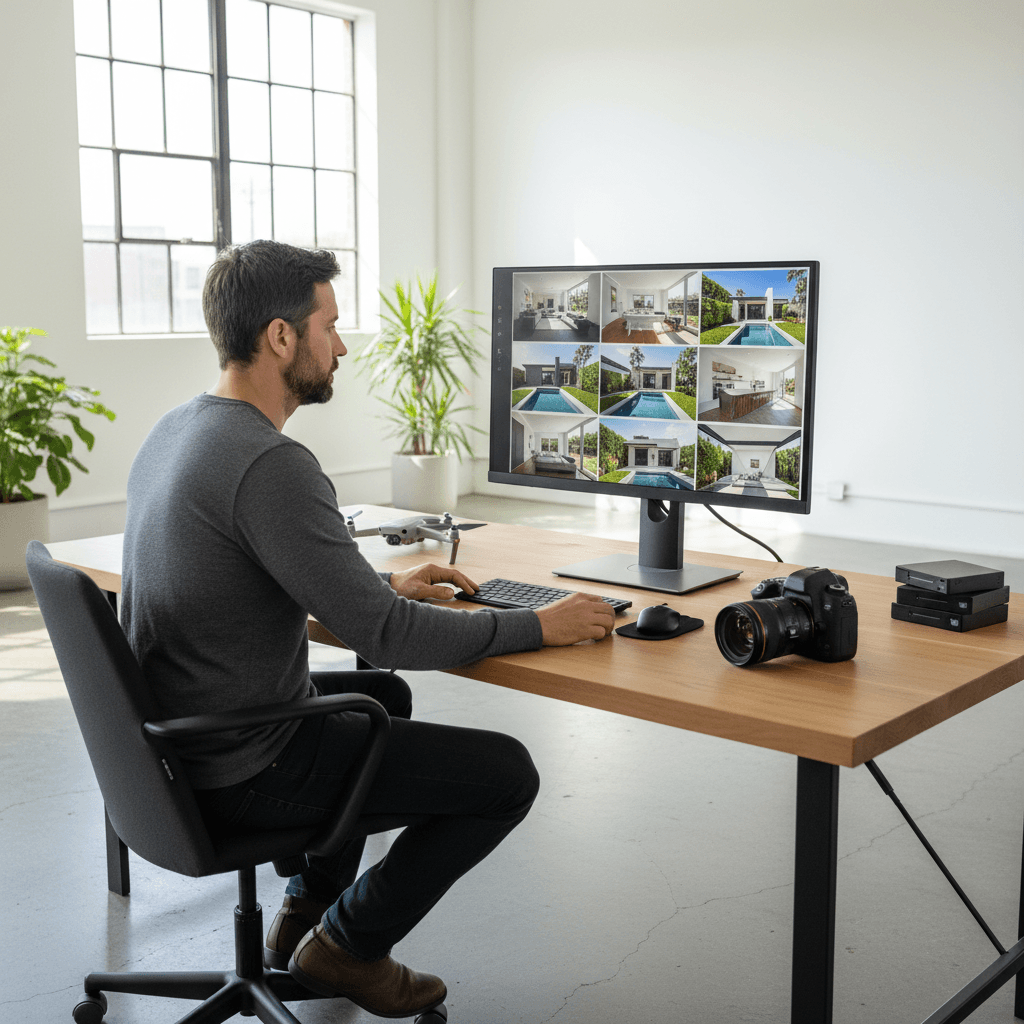
Key takeaway:A strong real estate photography portfolio makes it easy for agents to judge your consistency, coverage, and fit within a minute. Curate a small set of representative property projects, pair polished photos with useful media such as video and floorplans, and make the next booking step obvious.
A real estate photography portfolio is more than a gallery of attractive rooms. It is a sales tool that shows how reliably you can present different property types, lighting conditions, layouts, and marketing needs. For a realtor comparing several providers, the portfolio should answer three questions quickly: Can this photographer create the look I need? Can they cover the whole listing? Can I contact them without friction?
By Sumeet S., Founder & CEO - Silver Valley Studios Inc.
Last updated: 2026-06-02
What a real estate photography portfolio should prove
A useful portfolio demonstrates repeatable quality rather than one lucky hero image. Visitors should see balanced interiors, controlled window light, straight vertical lines, inviting exteriors, and a consistent editing approach across several properties.
It should also communicate the scope of your real estate media. Photos may be the first filter, but agents often need a complete package that includes a video tour, vertical social clips, drone coverage, or a 2D floorplan. Showing those deliverables in context helps a prospect understand what they can book.
- Visual consistency: Similar colour, exposure, composition, and finishing standards across projects.
- Property range: A useful mix of condos, townhomes, single-family homes, new builds, acreage, or commercial spaces where relevant.
- Marketing depth: Still photography supported by motion, aerial context, and layout information.
- Operational clarity: Short project descriptions, clear service labels, and a visible contact path.
How many projects should a portfolio include?
Begin with roughly 8–12 representative projects rather than uploading every assignment. That range gives you room to show variety while keeping the decision manageable for a busy agent. Each project can contain 12–24 carefully sequenced images, with additional media included only when it adds information or demonstrates a bookable service.
Quality matters more than a fixed count. If you have fewer finished projects, publish a smaller collection with honest descriptions and expand it as your body of work grows. Do not use repeated angles, near-identical rooms, or weak older work simply to make the gallery appear larger.
Choose projects that show range
- Include different home types and room layouts, not just several versions of the same interior.
- Show both daylight and lower-light conditions so visitors can assess exposure and colour handling.
- Include at least one exterior sequence that explains the property’s setting and curb appeal.
- Use commercial or brand work only when it supports the audience you want to attract.
Use a consistent project sequence
Open with the strongest exterior or arrival image, then guide the viewer through the property logically. A common sequence is exterior, entry, living area, kitchen, primary suite, bathrooms, secondary rooms, amenities, and outdoor spaces. The exact order can change for an unusual home, but the visitor should never have to guess where they are.
Keep project labels specific. A simple title such as “Maple Ridge townhome | Renovated kitchen” gives more context than “Recent work,” while still allowing the images to lead.
Which assets belong in a real estate photography portfolio?
A real estate photography portfolio should show the deliverables an agent can actually request. Use each media type to answer a different marketing need instead of adding formats as decoration.
HDR property photography
Still images establish the core visual standard. Show bright but believable interiors, controlled highlights around windows, neutral colour, and carefully corrected verticals. A room should feel spacious without looking distorted, overprocessed, or disconnected from the adjacent spaces.
Cinematic video tours and vertical clips
Video demonstrates movement, pacing, and the relationship between rooms. A strong example uses purposeful camera movement and an understandable route through the property rather than a collection of unrelated pans. Short vertical clips can show whether your work is ready for social platforms, but keep them brief and place them beside the related project.
Drone photography and video
Aerial media is most valuable when it explains context: lot size, surrounding landscape, waterfront position, acreage, access, or a neighbourhood relationship. Include it where the setting affects the buying decision, not automatically for every listing. The portfolio should present drone work as a useful perspective, subject to applicable permissions and site conditions, rather than as a guaranteed feature.
2D floorplans
Floorplans help viewers understand flow and approximate relationships between rooms. Show a clean, readable example beside the corresponding photography so prospects can see how the plan supports the visual story. Avoid presenting a sample as accurate for a property unless the underlying measurements and production process support that claim.

How to structure the portfolio page
The first screen should establish who the studio serves, what it produces, and where it works. Follow that introduction with a focused project grid, not a long wall of thumbnails. Each tile should have a clear image, short label, and enough contrast for the text to remain readable on mobile.
Recommended page sections
- Positioning: State the primary audience and the main listing-media services.
- Featured projects: Lead with the strongest, most representative work.
- Service examples: Group photos, video, drone, vertical clips, and floorplans where useful.
- Process signal: Explain what a client receives without turning the portfolio into a long sales page.
- Contact action: Place a concise enquiry or booking prompt after the first project group and at the end.
Filters can help when the collection is genuinely broad. Categories such as residential, commercial, new build, and brand content are useful only when each category contains enough strong examples. Empty or thin filters create more friction than clarity.
For an example of how a production studio presents its work, review the Silver Valley Studios portfolio highlights. Evaluate the navigation, project grouping, and media mix rather than copying a layout without considering your own audience.
How to evaluate image quality before publishing
Review every selected project at the size a visitor will actually see it. A technically impressive file can still weaken the portfolio if the sequence is repetitive, the edit is inconsistent, or the room appears misleadingly bright.
Capture and editing checks
- Keep vertical lines and horizons level unless a deliberate composition requires otherwise.
- Balance window detail with a natural interior exposure; avoid grey rooms and glowing white windows.
- Use a consistent white balance across adjacent rooms, especially where daylight and warm fixtures mix.
- Correct distracting lens distortion while preserving a believable sense of space.
- Check that exterior images, twilight frames, and interiors share a coherent finishing style.
Web and accessibility checks
- Export in sRGB and compress files so the page remains responsive on mobile connections.
- Use descriptive alt text that identifies the visible room, setting, or action without repeating keywords.
- Keep filenames understandable, such as property-city-room-sequence, before uploading.
- Test captions, galleries, video playback, and contact links on a phone as well as a desktop.
Use the real estate media services overview to compare how photography, video, drone coverage, and floorplans can be grouped into a coherent deliverable. The portfolio should make those services understandable through examples, not unsupported promises about outcomes.
How to make a Maple Ridge portfolio locally relevant
For a studio serving Maple Ridge and the wider regional market, local relevance should appear naturally in project names, captions, and property context. It is more useful to identify the kind of listing and setting than to repeat a city name under every image.
Maple Ridge work may include townhomes, family homes, larger properties, and new construction. When the surrounding land or neighbourhood relationship affects the listing, pair interior photography with an exterior sequence, aerial perspective, or floorplan that helps a remote viewer understand the property.
Regional conditions also influence planning. Variable cloud cover can produce soft exterior light, while seasonal changes affect landscaping and twilight timing. Describe these as production considerations rather than guarantees, and show the resulting work when it is genuinely representative.
A service-area page or portfolio should not imply that every location receives an identical package. Silver Valley Studios is based in Maple Ridge and serves communities including Abbotsford, Mission, Chilliwack, Langley, Surrey, Coquitlam, Burnaby, and Richmond, along with broader Greater Vancouver and Vancouver Island coverage. Use only the locations and services that match the actual enquiry.

A practical portfolio review checklist
Before publishing or refreshing the collection, review it as if you were an agent with a listing appointment in the next few days. The goal is not to admire the gallery; it is to decide whether the evidence supports a confident enquiry.
Content and curation
- Are the first three projects strong enough to represent the current standard?
- Does the collection cover the property types and media services you want to sell?
- Does every image contribute a new room, detail, viewpoint, or decision-making piece of context?
- Are project descriptions short, accurate, and specific about the work shown?
Conversion and usability
- Can a visitor identify the service area and intended client within a few seconds?
- Can the gallery load and navigate comfortably on a phone?
- Is the contact path visible without forcing visitors to search through the page?
- Do all buttons, media controls, captions, and links work?
Maintenance
Review the portfolio monthly and make a meaningful change when you have suitable new work. That might mean replacing a weaker project, improving a sequence, adding a new media sample, or updating a description. A quarterly review can assess whether the collection still reflects the clients and property types the studio wants to attract.
Do not claim a listing sold faster, generated more enquiries, or achieved a particular engagement result unless you have permission and verifiable records. A portfolio can show craft and process without turning subjective impressions into statistics.
How to promote a real estate photography portfolio
Promotion works best when the portfolio is already easy to understand. Create a short vertical highlight from several projects, share a small carousel with a clear project label, and place the portfolio URL in listing proposals, email signatures, and relevant social profiles.
Use one project for one message. A post about a renovated Maple Ridge kitchen can focus on daylight balance and detail coverage; an acreage project can focus on aerial context and the relationship between buildings and land. This approach gives agents a reason to visit the full portfolio instead of seeing an undifferentiated stream of images.
Keep promotional language aligned with the evidence on the page. If the portfolio shows photos, video tours, drone work, and floorplans, describe those deliverables clearly. Avoid broad claims such as “the best” or “guaranteed to sell” that the gallery cannot substantiate.
Real estate photography portfolio FAQ
What should appear above the fold on a real estate photography portfolio?
Show a strong property image, a concise description of the studio’s audience and services, the service area, and a visible contact action. A visitor should understand the portfolio’s purpose before scrolling through the full gallery.
How many images should each property project include?
Use about 12–24 images when the project has enough distinct spaces and viewpoints to justify them. Sequence the set from arrival through the main living spaces, bedrooms, bathrooms, amenities, and outdoor areas. Remove near-duplicates even if that leaves a shorter gallery.
Should a portfolio include video, drone, and floorplans?
Include them when they are services you genuinely offer and when the examples are strong enough to evaluate. Video shows movement and flow, drone explains the property’s setting, and floorplans clarify layout. Together they demonstrate broader real estate media capability than still images alone.
How often should a real estate photography portfolio be updated?
Review it monthly and refresh it whenever new work better represents your current standard. Replace weak or dated examples rather than adding material indefinitely. A regular review also catches broken links, slow media, outdated service descriptions, and captions that no longer match the collection.
Build a clearer portfolio for your next listing
A persuasive real estate photography portfolio is selective, easy to scan, and grounded in work that a prospective client can inspect. Curate representative projects, show the media that agents can book, explain the regional fit, and keep the contact path simple.
If you are planning real estate media in Maple Ridge, Greater Vancouver, or the surrounding service area, contact Silver Valley Studios to discuss the visual package and portfolio structure that fit your next listing.