

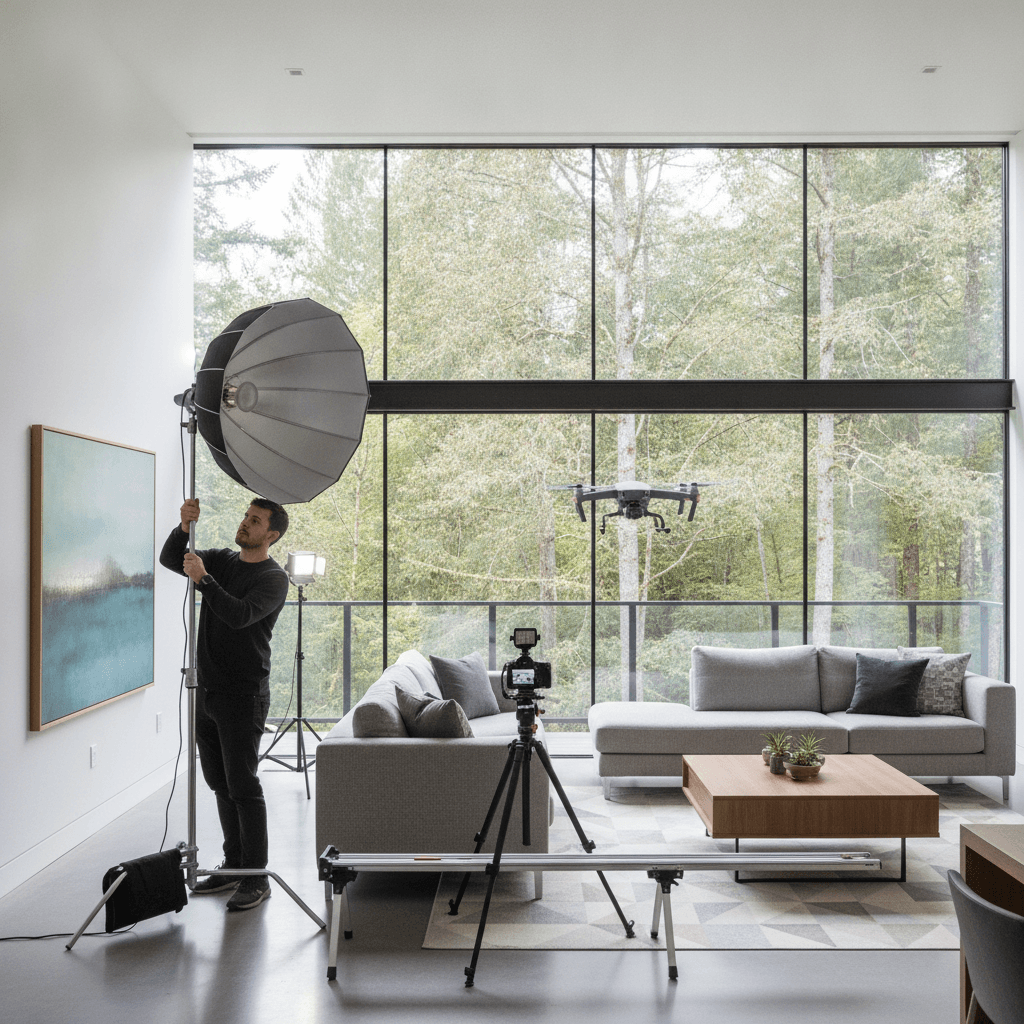
Last updated: October 2026
Key takeaway:Real estate photography video combines listing photos, a property tour, short-form social clips, drone media where useful, and a floorplan into one consistent marketing story. The right mix helps buyers understand a home's condition, layout, light, and setting before they book a showing. For Maple Ridge agents and sellers, the best package is planned around the property rather than added as a fixed checklist.
By Sumeet S., Founder & CEO, Silver Valley Studios Inc.
Real estate media has to do more than make a property look attractive. It needs to answer practical questions quickly: How do the rooms connect? Is there enough natural light? Does the yard provide privacy? Will the furniture fit? A coordinated photo and video plan gives buyers useful context while helping agents present the listing clearly across MLS, websites, and social channels.
This guide explains what real estate photography video includes, how a production normally works, and how to decide which formats are worth using. It is written for property marketing in Maple Ridge and the surrounding communities Silver Valley Studios Inc. serves, including Langley, Surrey, Coquitlam, Abbotsford, Mission, Chilliwack, Burnaby, and Richmond.
What a complete listing media plan should accomplish
A strong package gives every asset a specific job. Photos create the first impression, video explains movement and atmosphere, vertical clips support social discovery, drone footage establishes broader context, and a floorplan makes the layout easier to evaluate.
- Attract attention: Lead with accurate, well-composed images that show the home at its best.
- Explain the experience: Use a calm video path to show how the major spaces connect.
- Answer practical questions: Use floorplans and carefully selected detail images to clarify scale and circulation.
- Show context: Add aerial media when the lot, views, privacy, roofline, or nearby setting affects the buying decision.
- Support distribution: Prepare horizontal and vertical files for the channels where the listing will appear.
The objective is not to produce the largest possible number of files. It is to create a coherent set of truthful assets that lets a prospective buyer decide whether the property deserves a closer look.
What is real estate photography video?
Real estate photography video is an integrated property-marketing service that combines professional still photography with video tours and, when appropriate, supporting media such as drone coverage, vertical reels, and 2D floorplans. Rather than treating each deliverable as a separate shoot, the production team plans one visual story and adapts it for different uses.
That approach matters because each format communicates something different. A wide interior photograph can establish brightness and finishes, but it cannot show the order in which rooms are reached. A video can communicate flow, but a floorplan is usually better for checking dimensions and furniture placement.
What each format contributes
| Format | Best use | Planning question |
|---|---|---|
| HDR listing photos | MLS galleries, websites, brochures, and listing announcements | Which rooms and features should earn the first impression? |
| Horizontal video tour | Property pages, YouTube, MLS-connected video, and presentations | What route makes the home's layout feel intuitive? |
| Vertical video | Instagram, TikTok, short-form social, and paid campaigns | What single feature can stop a viewer's scroll? |
| Drone photo or video | Lots, views, acreage, privacy, rooflines, and surrounding context | Does the setting materially influence the buyer's decision? |
| 2D floorplan | Layout review, furniture planning, and buyer self-qualification | Could room relationships or dimensions be misunderstood from photos? |
Silver Valley Studios Inc. produces these forms of real estate media as a coordinated service. The final selection can be scaled to the property: a compact condo may need excellent photos, a concise tour, and a floorplan, while a detached home on a large lot may benefit from aerial context and several social edits.
Why coordinated media matters for Maple Ridge listings
Buyers often encounter a listing on a small screen and decide within seconds whether to continue. Clear photos establish credibility, while video and floorplans help answer the questions that a gallery alone cannot resolve. Accurate representation also helps set expectations before a buyer or agent invests time in a showing.
Maple Ridge properties can have distinctive visual challenges and advantages. Treed lots may create attractive privacy but reduce interior brightness at certain times of day. A sloped site, detached workshop, covered patio, mountain outlook, or long driveway may be important to the story even though it is difficult to understand from a few interior photographs.
Local planning considerations
- Light and tree cover: Schedule key rooms when the available natural light supports the intended story. Do not brighten an image so aggressively that it no longer represents the property.
- Weather: Keep a practical rain contingency for exterior and drone work. Covered entries and indoor sequences can still be captured productively when conditions change.
- Street and driveway activity: Quieter shooting periods can reduce parked vehicles and interruptions in exterior images and opening video shots.
- Property context: Use aerials or a carefully chosen exterior sequence when lot depth, privacy, views, or proximity to open space is a genuine selling consideration.
When marketing a home, the media should remain accurate. A bright, balanced edit can improve visibility, but it should not conceal permanent conditions, materially alter finishes, or suggest a view or feature that buyers will not find on site.
For a deeper still-photography workflow, see the real estate photography guide.
How the real estate photography video process works
A dependable production begins before the camera arrives. The agent, seller, and media team need a shared understanding of the property's strongest features, the intended launch date, access requirements, and the channels that will use the final files.
1. Define the listing story
Start by identifying the likely buyer and the features that should be understood quickly. For one Maple Ridge family home, the story might centre on the connection between the kitchen, living area, covered patio, and private yard. For a condo, it may focus on efficient circulation, natural light, views, storage, and shared amenities that are actually available to residents.
2. Prepare the property
A seller checklist should cover decluttering, personal photographs, loose cords, lamps, linens, vehicles, pets, window coverings, and exterior maintenance. The goal is not to make every home look identical; it is to remove distractions so the space, condition, and features can be understood.
3. Schedule around access and light
Confirm entry instructions, alarm details, parking, occupants, and any restrictions before the appointment. For exterior work, allow enough flexibility to respond to rain, glare, or heavy shade. Drone work also requires an appropriate assessment of the location and conditions before it is included in the plan.
4. Capture the core assets
A typical sequence includes still photographs, the planned video route, short-form clips, exterior details, and measurements for the floorplan. Capturing with the final distribution in mind avoids producing a beautiful horizontal composition that cannot be adapted sensibly for a vertical screen.

5. Edit for consistency and accuracy
Editing can balance exposures, correct colour, straighten architectural lines, remove temporary distractions, and shape a smooth narrative. It should preserve the property's real proportions and finishes. Video editing may include music or sound design, titles, transitions, and shorter exports, but those choices should support clarity instead of hiding the way the home actually feels.
6. Deliver files for launch
Organised folders and clear file names save time when an agent is uploading a listing under deadline. A practical delivery can include web-ready photographs, a finished horizontal tour, vertical social cuts, a floorplan, and any agreed aerial files. Confirm the intended usage and delivery timing at the beginning rather than treating them as last-minute details.
| Stage | Typical responsibility | Useful output |
|---|---|---|
| Planning | Agent and media team | Property priorities, access plan, shot list, and distribution plan |
| Preparation | Seller with agent guidance | Decluttered, styled, accessible spaces and ready exteriors |
| Capture | Media team | Photos, video, optional drone coverage, and measurements |
| Post-production | Media team | Colour-consistent, platform-appropriate final files |
| Publication | Agent or brokerage | Listing gallery, video placement, social launch, and compliant branding |
How to choose the right media mix
Not every listing needs every deliverable. Select formats according to the property, the buyer's likely questions, the launch plan, and the value of the feature being shown. A larger package is not automatically a better package if the additional assets do not improve understanding.
Use professional photos as the foundation
Still photographs remain the primary way many buyers scan a listing. Prioritise a logical set of exterior, living, kitchen, dining, bedroom, bathroom, office, storage, and outdoor images. Keep vertical lines controlled and use wide lenses carefully so rooms feel spacious without appearing distorted.
Add a horizontal tour to explain flow
A property video should have a deliberate route rather than a collection of disconnected clips. A common structure begins with the exterior, enters through the main access point, follows the principal living path, visits important secondary spaces, and closes on a distinctive feature. Smooth movement and honest pacing usually serve a listing better than rapid effects.
The realtor photography checklist can help an agent coordinate preparation and the core visual priorities before a shoot.
Create vertical clips from meaningful moments
Vertical edits work best when each has one clear hook: a sunlit kitchen, a private backyard, a flexible office, a view, or an efficient main floor. A short clip should make the viewer curious without claiming something the full listing cannot support. Captions and on-screen text should be easy to read and should not obscure important architectural details.
Use drone media selectively
Drone work can be valuable for acreage, large lots, privacy, water or mountain outlooks, distinctive rooflines, and relationships to surrounding land. It is less useful when the surrounding context adds little or when conditions prevent a safe, clear, and representative result. Discuss the intended flight and output during planning rather than assuming aerial coverage belongs in every package.
Use a floorplan to clarify layout
A floorplan is especially useful for multi-level homes, compact rooms, unusual circulation, basement suites, and properties where furniture placement is a major question. It complements photography; it does not replace accurate listing information or a professional measurement process. Label rooms consistently and ensure the finished graphic reflects the measured layout supplied for the listing.
Best practices for accurate, useful listing media
Professional real estate media should be attractive and responsible at the same time. Buyers need confidence that the online presentation corresponds with the property they will visit, while agents need assets that can be published under their brokerage and regulatory requirements.
- Represent the property honestly: Do not digitally remove permanent defects, materially change colours, add features, or use angles that create a misleading impression of size.
- Keep brokerage information clear: Listing materials should follow the applicable brokerage and advertising requirements, including the required identification and approved names.
- Obtain permission before publishing: Confirm that the seller authorises photography, video, identifiable personal items, and social distribution. Take particular care with people, children, pets, artwork, and neighbouring properties.
- Plan privacy carefully: Avoid exposing documents, alarm codes, access information, or personal details that do not belong in public marketing.
- Match colour across formats: A consistent edit makes the listing feel intentional, but natural colour is more valuable than a dramatic preset.
- Make video easy to follow: Use stable movement, purposeful transitions, and audio that does not compete with the property's visual information.
- Label and organise files: Separate photographs, tours, reels, floorplans, and aerial files so the agent can publish the correct version quickly.
Regulatory guidance can change, so agents and brokerages should confirm current requirements before publication. The media team can support a compliant workflow, but the publishing party remains responsible for using approved information and obtaining the necessary permissions.
Production tools and delivery standards
Good equipment helps, but repeatable results depend more on planning, technique, and post-production discipline. A typical property workflow may use full-frame cameras, wide and standard lenses, tripods, stabilisers, controlled lighting, measuring equipment, and an aerial platform when the location and conditions make it appropriate.

Capture decisions that improve consistency
Tripod discipline helps maintain level architecture and repeatable compositions. Exposure bracketing can preserve window detail and interior shadows when used carefully. A stabiliser can create a smooth tour, while practical lights and small LED sources can help balance a room without making it look artificially lit.
Editing decisions that protect trust
Colour management keeps whites, wood tones, walls, and exterior materials consistent from one asset to the next. Export settings should reflect the destination: large files for archival use, efficient versions for web, and correctly framed edits for social platforms. Keep an original project archive and a clearly named final folder so revisions do not overwrite the approved files.
Examples of choosing media around the property
The following examples describe planning patterns rather than performance guarantees. They show how the same real estate media service can be adapted to different homes without promising a particular number of views, inquiries, showings, or offers.
Maple Ridge detached home with a treed yard
The key challenge is often balancing interior brightness with the privacy created by mature trees. Schedule the rooms when useful daylight reaches them, use balanced exposures, and make the backyard connection clear in both stills and the video route. A floorplan can then help buyers understand how the main living spaces relate to bedrooms, basement areas, and outdoor access.
Surrey townhouse with a compact main floor
For a tighter layout, avoid exaggerated wide angles and let the video explain circulation honestly. A short vertical clip may focus on the kitchen-to-patio connection, while a floorplan answers questions about furniture placement, stairs, storage, and room proportions.
Langley condo where natural light is limited
Use consistent bulbs and a controlled colour treatment to make the space feel inviting without changing its character. Photos should show the actual window orientation and views, while the tour can emphasise storage, the relationship between living areas, and any feature that distinguishes the unit from comparable listings.
Frequently asked questions about real estate photography video
What is normally included in a real estate photography video package?
A package may include professional listing photos, a horizontal property tour, vertical social clips, a 2D floorplan, and optional drone photography or video. The exact combination should reflect the property, intended audience, access, weather, and publishing plan. Confirm deliverables and usage before the shoot.
How long does a real estate media shoot take?
Timing depends on the home's size, preparation, number of formats, measurements, exterior conditions, and whether aerial work is included. A straightforward townhome or detached-home appointment may take several hours, while larger or more complex properties require additional planning. Delivery timing should be agreed in advance around the listing launch.
Does every Maple Ridge listing need drone footage?
No. Drone media earns its place when lot size, privacy, views, rooflines, acreage, or surrounding context affects the decision. If an aerial view adds little or conditions are unsuitable, strong ground photography, video, and a floorplan may be more useful.
How can sellers prepare for the shoot?
Remove clutter and personal documents, complete small maintenance tasks, clear counters, tidy outdoor areas, replace failed bulbs, and make a plan for pets and vehicles. Keep every room accessible and tell the agent or media team about features that should be highlighted. A prepared home gives the crew more time to focus on composition and storytelling.
Plan a clearer listing story
Real estate photography video works best when it is treated as one coordinated communication system. Photos attract attention, video demonstrates flow, floorplans clarify layout, vertical edits support discovery, and drone media provides context when the setting matters. Together, these assets can make the online presentation more useful without overstating what the property offers.
For a Maple Ridge listing, begin with the buyer's likely questions and the home's strongest truthful features. Then choose the formats, schedule, preparation, and delivery plan that answer those questions clearly.
Key takeaways
- Build the media plan around the property rather than ordering every format automatically.
- Use photos for first impressions, video for flow, floorplans for layout, and drone for context.
- Schedule around light and weather, especially for treed lots and important exterior spaces.
- Protect trust with accurate editing, permission-aware publishing, and clear brokerage information.
- Prepare files for MLS, websites, and social channels before the listing goes live.
Silver Valley Studios Inc. can help plan, capture, and deliver a cohesive package for your next property. Start a listing media conversation with the team about the home, timeline, and formats that will serve its story best.