

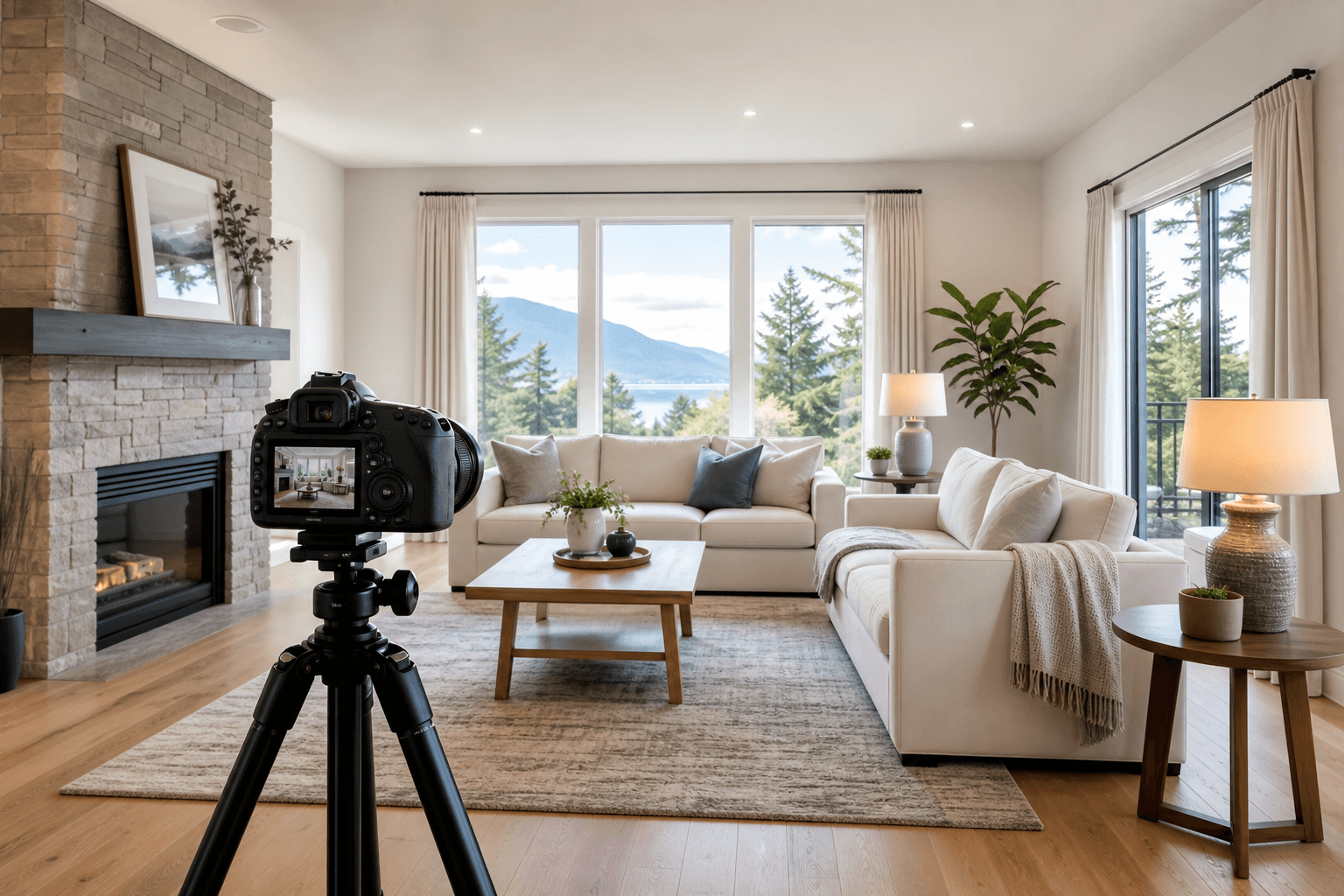
Good staging for listing media is not about making a property look like a different home. It is about removing distractions, improving flow and light, and helping buyers understand the space accurately through photos, video and floorplans. Repairs, disclosure decisions and legal property descriptions remain separate from staging.
Before the appointment, decide what should be visible, what should be safely stored and which features must be captured. The aim is a clean, truthful presentation that gives the photographer a clear path through the property and gives buyers useful context.
Quick summary

- Clear visible clutter, but do not conceal damage, stains, missing fixtures or other material conditions.
- Arrange furniture to show scale and movement rather than emptying every room.
- Prepare windows, curtains, bulbs and suitable lighting before the camera arrives.
- Protect privacy by removing documents, personal photos, valuables, screens and licence plates.
- Confirm access, pets, vehicles, locked rooms, deliverables and usage requirements in advance.
1. Declutter for a truthful, distraction-free presentation
Start with the items that compete with the property itself. Remove rubbish, excess countertop items, loose papers, visible laundry, toys, bins and unnecessary décor. Clear floors and surfaces enough that buyers can read the room’s size, storage and finishes without guessing what is behind the clutter.
Contain cords safely, straighten bedding and cushions, and move small personal items into a designated basket or storage area. Do not simply move the basket from room to room during the shoot. A useful pre-shoot checklist can help organize access, pets, vehicles, rooms, lighting and safety before the appointment.
Staging must not hide water staining, damage, missing fixtures, unsafe conditions or another material feature. Physical repairs and listing disclosures should be handled before publication. Editing may improve presentation, but it should not create a misleading impression of the property.
2. Arrange furniture to show flow and scale

Furniture should help the camera move logically from the entrance through the main living spaces, bedrooms, bathrooms and outdoor areas. Keep clear walking paths and avoid placing oversized pieces where they block doorways, windows or important architectural features.
You do not need to remove every piece of furniture. Instead, ask whether each item helps communicate the room’s purpose and scale. A dining table can establish the relationship between a kitchen and dining area, while a bed or sofa can show proportion. Remove or reposition only what obstructs movement, makes the room feel cramped or prevents a useful camera angle.
Consistent camera height, level lines and sensible room order also affect how buyers understand the home. For more detail on listing photo composition, consider how sequence, scale cues and connections between rooms will read as a complete visual story.
3. Prepare lighting and windows for natural-looking images
Before the shoot, replace burned-out bulbs and decide which lights should be on. Open curtains and blinds where the view is useful, or level and align them when inconsistent window coverings would distract from the room. Turn on suitable task lighting, such as under-cabinet lights, when it supports the space without creating distracting colour casts.
Bright windows, deep interior shadows, reflective finishes and mixed light can create difficult contrasts. In those situations, HDR listing photos can preserve more detail across highlights and shadows when exposures are carefully blended. HDR is not a substitute for replacing a faulty bulb, cleaning a window or preparing the room properly.
Watch for reflections in mirrors, glossy appliances and glass doors. Remove people, clutter and private information from reflective areas before the photographer begins. If exterior light is important, discuss the best appointment window rather than assuming every room will photograph equally well at any time of day.
4. Remove personal items without hiding important property information
Privacy preparation is different from concealing a property feature. Remove family photographs, mail, prescription items, financial papers, visible passwords, computer screens and valuables. Check mirrors and windows for unintended reflections, and move vehicles if licence plates or personal items would appear in the frame.
Prepare a secure place for anything removed at the last minute. Sellers, tenants and agents should know who is responsible for storing those items, and pets should be secured before equipment arrives. Do not create an unsafe situation or leave an animal unattended.
Important features should remain represented honestly. Do not remove a fixture, block a mechanical area or rearrange a room in a way that gives buyers a false understanding of the home. The agent should verify descriptions, room designations, permitted uses and measurements separately from the images.
5. Stage exterior and outdoor areas as part of the listing story
The entrance, driveway, patio, balcony, yard and surrounding approach can influence how buyers understand the property before they enter. Clear unnecessary vehicles, bins, hoses, toys and seasonal items. Sweep visible paths, arrange outdoor furniture neatly and remove dead plants or loose objects where practical and safe.
Keep outdoor preparation proportional to the property. A small balcony may need only clear flooring and simple furniture placement, while a larger yard may benefit from showing the relationship between the house, patio, garden and access points. Do not add décor that implies a feature is included when it is not.
Exterior images, video and drone coverage can provide useful context about a lot, roofline, views or surrounding setting, but they should not exaggerate distance, privacy or neighbourhood features. Drone work also depends on site conditions, permissions and the selected service, so confirm those details before booking.
6. Match the preparation plan to the property situation
Preparation changes depending on occupancy, access and property type. Set expectations with the listing agent, owner, tenant, building manager and media provider before the appointment.
| Property situation | Preparation priorities |
|---|---|
| Occupied home | Set a clear deadline for decluttering, secure pets and valuables, move extra vehicles and confirm who will approve last-minute changes. |
| Vacant home | Confirm utilities, lighting, temperature, elevator or loading access and whether furniture or staging is present. |
| Tenanted property | The owner or agent should manage lawful notice and consent requirements. Provide the crew with an agreed access plan and identify off-limits spaces. |
| Apartment or strata property | Confirm permission for shared amenities, parking, lobby and exterior areas. Arrange building access and do not enter secured spaces without authorization. |
| Exterior-focused shoot | Clear the approach, driveway, patio and yard, then confirm weather, access, vehicles and any areas that must be included or excluded. |
During the session, keep people out of the working path and do not move equipment. Open access to a storage, mechanical or electrical area only when it is part of the agreed scope and safe to enter.
7. Complete a final media-readiness check before the appointment
Use one final check to prevent avoidable delays and missed features:
- Confirm the property address, unit, access contact, lockbox details and appointment window.
- List the rooms, exterior areas and amenities that should be captured.
- Identify three priority features, such as a view, fireplace, finished basement or outdoor living area.
- Clear counters, floors, windows, cords, bins, vehicles and visible personal information.
- Replace burned-out bulbs, open or align window coverings and prepare suitable lights.
- Secure pets and confirm locked rooms, tenant restrictions or safety concerns.
- Settle the required photos, video, floorplans, aerial coverage, orientations and delivery formats.
- Confirm usage permissions, timing, weather or access changes and the process for revisions.
When selected together, photos, video, drone coverage and measurements may be completed during one coordinated appointment, so the property only needs to be prepared once. Exact deliverables depend on the booking and property requirements.
Choose media that helps buyers understand the property
Not every listing needs every format. Choose media according to the questions a buyer is likely to have:
- HDR photos: Useful for polished still images where windows, shadows, reflective finishes or mixed lighting create strong contrast.
- 2D floorplans: Helpful when room relationships, circulation or overall layout are difficult to understand from photographs alone.
- Property video tours: Useful for showing movement through the home, transitions between rooms and the feeling of the space.
- Vertical video: A practical option when the listing also needs social-first content for mobile viewing.
- Drone photography or videography: Valuable when the lot, views, setting or exterior context contributes meaningfully to the listing.
Silver Valley Studios publishes real estate packages that can include HDR photos and 2D floorplans, with other options adding vertical social video or cinematic 4K video. Confirm the current scope, property size requirements and selected deliverables rather than assuming every package includes every format.
For broader staging perspective, this home staging overview can help distinguish preparing a home for buyers from preparing it for professional media. The practical test remains the same: does the choice improve clarity without misrepresenting the property?
Questions to confirm with the media provider
- Which rooms, exterior areas and features are included?
- Are photos, video, floorplans, drone coverage and vertical versions separate deliverables?
- What access, permissions or drone information is required?
- Which file formats, orientations and sizes will be delivered for MLS, web, print and social use?
- Who may publish the files, and are there usage or later-reuse conditions?
- How are weather, access problems, reshoots and revisions handled?
- Will floorplans be branded, unbranded or both?
FAQ
Should every room be staged before listing photography?
Every room included in the listing should be safe, accessible and reasonably presentable, but not every room needs the same level of styling. Prioritize spaces that communicate the home’s layout, features and buyer experience.
Do sellers need to leave the property during a real estate media appointment?
Not necessarily. Some agents and sellers provide access details and leave the crew to work, while others prefer to stay. If occupants remain, they should keep clear of the working path, secure pets and avoid moving equipment.
Can editing or HDR photography replace repairs or hide property defects?
No. HDR blending can balance bright windows and dark interiors, while editing can improve colour and perspective. Neither should conceal damage, water staining, missing fixtures, unsafe conditions or another material property fact.
Conclusion: prepare the property, then protect its accuracy
The strongest staging plan is practical: remove distractions, preserve room flow, manage light, protect privacy, prepare outdoor areas and confirm access. Then match the media to the property, whether that means still photography alone or a coordinated set of photos, floorplans, video and aerial coverage.
Before the appointment, write down the rooms and features that matter, settle permissions and usage, and make sure everyone understands what must remain visible. Good preparation helps the final media explain the home clearly without promising something the property cannot deliver.
Based in Maple Ridge, Silver Valley Studios Inc. provides real estate photos, 2D floorplans, video and drone coverage across its regional service area, including Greater Vancouver, the Fraser Valley and Vancouver Island.